
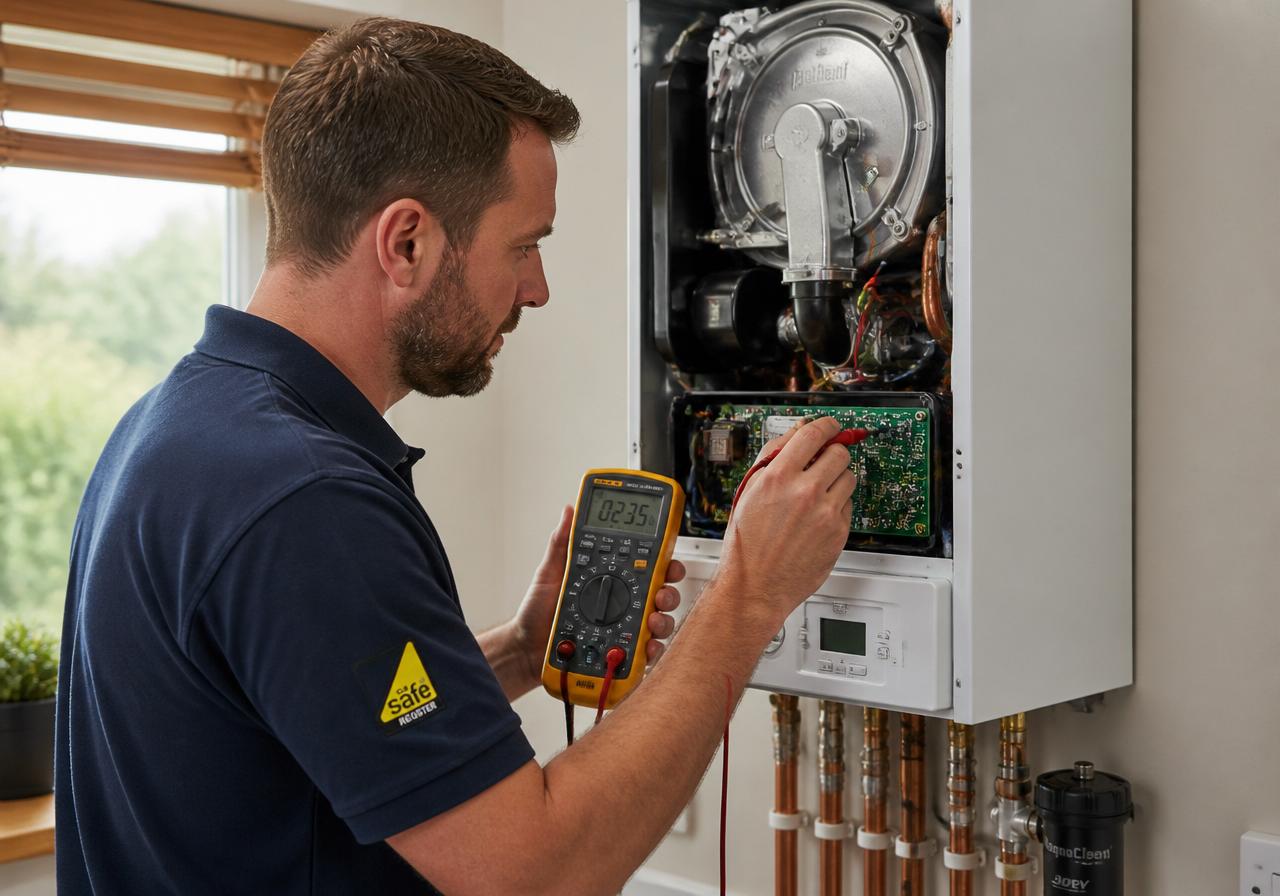
The short version
- One reset is fine; repeated resets are not
- Codes group into ignition, flow/overheat, pressure, fan and sensor families
- Note the exact code before resetting — it speeds diagnosis
- Repeated overheat lockouts often mean poor circulation, not a broken boiler
The common code families
Manufacturers number them differently, but the underlying causes repeat across brands.
- Ignition failure — gas supply, ignition electrode, gas valve or flame sensing
- Overheat / flow — circulation problem, blocked heat exchanger, failing pump
- Low pressure — leak, expansion vessel or PRV
- Fan or air pressure switch — fan bearings, blocked flue or condensate
- Sensor faults — NTC thermistors reading out of range, often cheap to replace
Why repeated resetting is a bad idea
On ignition faults, each reset dumps another cycle of unburnt gas into the chamber before the lockout re-triggers. On overheat faults, you're repeatedly cooking a heat exchanger that isn't getting flow. Both make the eventual repair bigger.
What to check before calling
Gas supply on and other gas appliances working, system pressure in range, condensate pipe not frozen in cold weather, and no obvious blockage at the flue terminal. Write down the code — it's the single most useful thing you can give us.
Common questions
Is a locked-out boiler dangerous?+
The lockout itself is a safety response. But don't keep overriding it — get the cause diagnosed.
Why does it work again after a reset then fail?+
Intermittent faults are usually thermal or flow-related, and they get more frequent as the part degrades.
Do you carry sensors and fans?+
Common wear parts for the major brands are on the van, so many faults are a first-visit fix.
Will you tell me the actual cause?+
Yes — we diagnose the underlying fault, not just clear the code.
Boiler locked out?
Tell us the code when you ring and we'll bring the likely part.