The short version
- Many boiler faults are preventable with regular servicing.
- Low pressure and frozen condensate lines are common, fixable issues.
- Internal component failures like PCBs often require professional replacement.
- Sludge build-up is a significant cause of inefficiency and breakdowns.
Low Boiler Pressure: A Frequent Culprit
One of the most common reasons for a boiler not working correctly is low system pressure. Most modern boilers have a pressure gauge, usually between 1.0 and 2.0 bar when cold. If the pressure drops below 1.0 bar, the boiler may stop operating as a safety measure. Leaks in the heating system, bleeding radiators, or recent repairs can all lead to pressure loss. While repressurising a boiler can often be done by the homeowner using the filling loop, it is important to investigate recurring pressure drops, as this suggests an underlying leak which may require a professional to locate and repair. This issue is largely preventable if leaks are addressed promptly.
- Check pressure gauge regularly.
- Repressurise carefully if needed.
- Investigate frequent pressure drops.
Diverter Valve Failure: Hot Water or Heating, But Not Both
Combination boilers use a diverter valve to switch between providing hot water to your taps and heating to your radiators. When this valve malfunctions, it typically gets stuck in one position, meaning you will either have hot water but no heating, or heating but no hot water. Sometimes it can become partially stuck, leading to lukewarm water or inefficient heating. This is a mechanical component that can wear out over time due to mineral deposits or general fatigue. There is no simple homeowner fix for a failing diverter valve; it requires a Gas Safe registered engineer to diagnose and replace. While not entirely preventable, good quality water treatment can prolong its life.
- Stuck valve prevents flow to one system.
- Can lead to lukewarm water.
- Requires Gas Safe engineer for replacement.
Frozen Condensate Pipe: A Winter Issue
Condensing boilers produce acidic wastewater, known as condensate, which is expelled through a pipe, usually to an external drain. In freezing weather, this external pipe can freeze, causing a blockage. The boiler’s safety mechanism will then often shut down to prevent the condensate from backing up into the system, displaying an error code. Homeowners can sometimes thaw a frozen condensate pipe themselves by pouring warm water over the exposed section of pipe, or by applying a hot water bottle. However, if the issue persists, or if the pipe repeatedly freezes, a Gas Safe registered engineer can assess options like rerouting or insulating the pipe to prevent future occurrences. This is a highly preventable issue with proper insulation and pipe routing.
- Boiler shuts down due to blockage.
- Often happens in cold weather.
- Can be thawed with warm water.
PCB and Fan Failures: Complex Electronic & Mechanical Faults
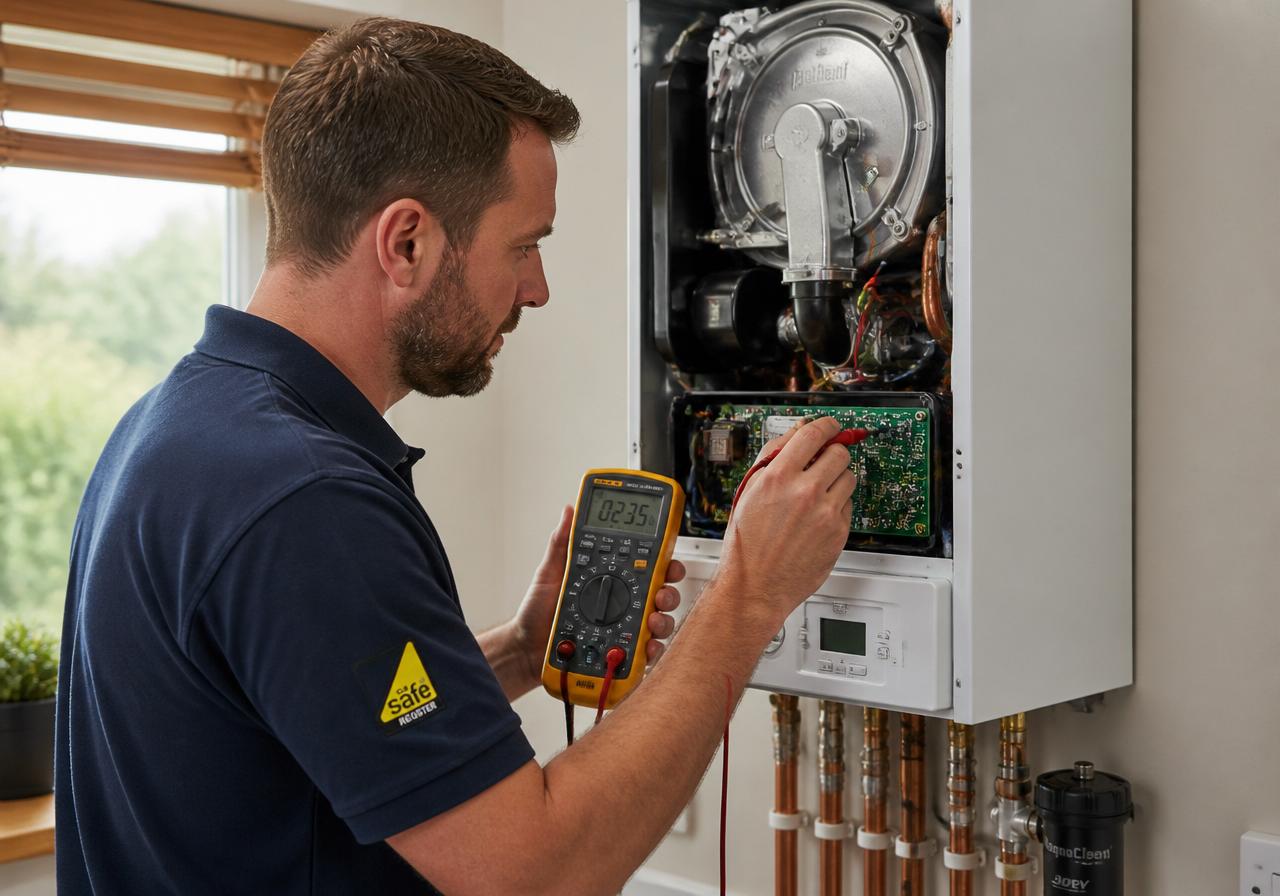
The Printed Circuit Board (PCB) is the 'brain' of your boiler, controlling all its functions. A faulty PCB can lead to a wide range of issues, from complete boiler shutdown to erratic behaviour, as it fails to send correct signals to components. Fan failures typically result in the boiler not firing up correctly, as the fan is crucial for expelling combustion gases. Both PCB and fan failures are internal component faults, often due to electrical surges, wear and tear, or manufacturing defects. They require a Gas Safe registered engineer for accurate diagnosis and replacement. These issues are generally not preventable by homeowners, though regular servicing can sometimes catch early signs of wear.
- PCB controls all boiler functions.
- Fan expels combustion gases.
- Requires Gas Safe professional replacement.
Sludge Build-Up and Corrosion: The System Destroyer
Over time, central heating systems can accumulate a dark, muddy substance known as sludge, a mixture of rust and other debris. This sludge can block pipes, radiators, and heat exchangers, drastically reducing heating efficiency and putting strain on the boiler components, leading to breakdowns. Symptoms include cold spots on radiators, noisy pipes, and a boiler that works harder but delivers less heat. This issue is highly preventable. Regular system flushing (powerflushing) and the addition of chemical inhibitors by a professional can protect your system. A magnetic filter can also help collect debris, preventing it from circulating and causing damage. This is a common and preventable cause of failure.
- Blocks pipes and radiators.
- Reduces efficiency and damages components.
- Preventable with flushing and inhibitors.
Sensor Faults: The Unseen Problem
Boilers rely on various sensors to monitor temperature, pressure, and flame presence. For example, a thermistor monitors water temperature, while a flame sensor ensures the burner is lit. If any of these sensors become faulty, the boiler's safety features may prevent it from operating correctly, leading to intermittent shutdowns or incorrect temperature output. The boiler may display a specific error code related to a sensor. Like PCBs and fans, sensor faults are internal component issues that require a Gas Safe registered engineer to diagnose and replace. While not directly preventable by homeowners, a boiler’s annual service includes checks that can sometimes identify failing sensors before they cause a complete breakdown.
- Sensors monitor boiler operation.
- Faults cause safety shutdowns.
- Engineer needed for diagnosis and replacement.
Common questions
How often should I have my boiler serviced?+
It is recommended to have your boiler serviced annually by a Gas Safe registered engineer. Regular servicing helps to identify potential issues early, maintain efficiency, and ensure safe operation. This proactive step can significantly reduce the likelihood of unexpected breakdowns and costly repairs by addressing wear and tear before it escalates.
Can I fix a boiler myself if it’s not working?+
For safety, you should never attempt to remove the boiler casing or tamper with gas components. While some issues like repressurising a low-pressure system or thawing a frozen condensate pipe can be attempted by a homeowner, anything beyond these simple checks should be left to a Gas Safe registered professional to ensure safety and prevent further damage.
What is a Gas Safe registered engineer?+
A Gas Safe registered engineer is legally qualified to work safely with gas appliances. They carry an ID card with their registration number, which you should always ask to see. This registration ensures they have the necessary training and competence to undertake gas work, providing homeowners with peace of mind regarding safety and quality of service.
My boiler is making a strange noise. What should I do?+
Unusual noises, such as banging, whistling, or gurgling, often indicate an underlying problem. It could be due to air in the system, low pressure, sludge build-up, or a failing component. It is advisable to contact a Gas Safe registered engineer to investigate the source of the noise. Ignoring these sounds can lead to more serious and expensive faults.
How can I prevent sludge in my heating system?+
Preventing sludge involves a combination of methods. A professional powerflush can remove existing sludge, and chemical inhibitors added to the system water help prevent future corrosion and debris build-up. Installing a magnetic filter is also highly effective at capturing metallic particles before they can circulate and cause damage. Regular annual servicing includes checks on inhibitor levels.
Need a Reliable Heating Engineer in Wigan?
For professional boiler diagnostics, repairs, and servicing by a Gas Safe registered business in Wigan, contact Brogas.