The short version
- Cold at the top is trapped air and is usually a five minute fix
- Air that returns within weeks means it is being drawn in, which is a separate fault
- Bleeding drops system pressure, so check the gauge afterwards
- One cold radiator behaves differently from every radiator being cold
Bleeding a radiator safely
This is a homeowner job and needs no tools beyond a bleed key and a cloth. Turn the heating off and let the radiators cool before you start, because the water inside is hot enough to scald.
- Turn the heating off and let the system cool
- Hold a cloth under the bleed valve at the top corner
- Turn the key slowly anticlockwise until air hisses out
- Close it as soon as water appears steadily, do not force it tight
- Check the boiler pressure gauge afterwards and repressurise if it has dropped below the marked band
When air keeps coming back
Air that returns after a few weeks is being generated or drawn in, not left over from filling. The usual causes are corrosion inside the system producing hydrogen, a leak on the negative pressure side of the pump pulling air in, or an automatic air vent that has failed. Repeated bleeding treats the symptom while the cause carries on.
- Hydrogen from internal corrosion, which smells slightly of rotten eggs
- Air drawn in through a pump gland or a poorly sited feed
- A failed automatic air vent on the boiler or in the loft
Cold at the top versus cold at the bottom
The two symptoms have almost nothing in common. Air rises, so it collects at the top of the radiator and blocks heat there. Sludge is heavy, so it settles at the bottom and blocks flow there. If your radiator is cold along the bottom edge, bleeding it will achieve nothing and the answer is cleaning the system.
If the whole radiator stays cold
Check both valves are open, including the lockshield under its cap. A thermostatic valve with a pin seized shut is extremely common on radiators that have been turned off all summer, and freeing or replacing the head fixes it. If every radiator is cold, the problem is the pump, the diverter valve or the boiler rather than the radiators.
Where the line is
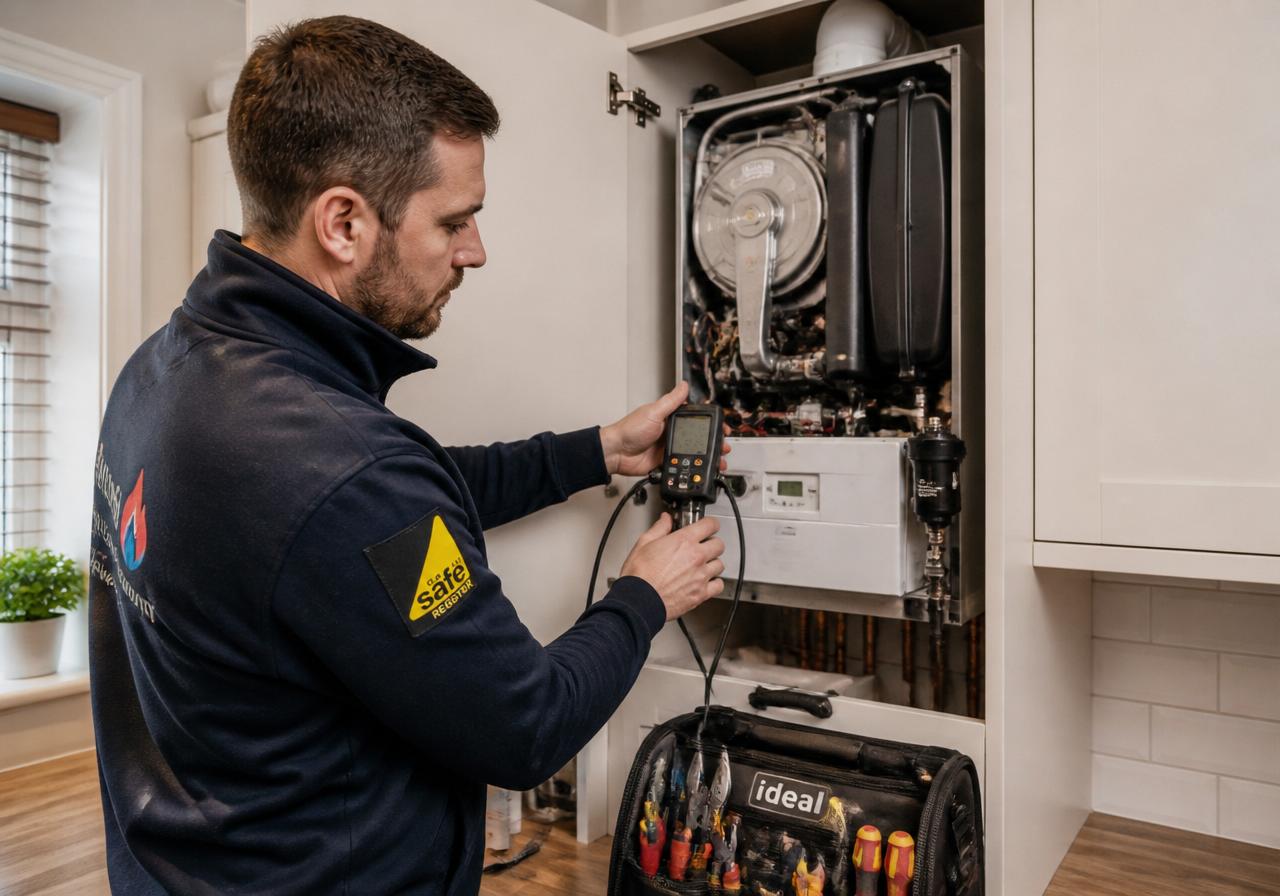
Never remove the boiler casing, adjust gas controls or work on any gas component yourself. Those are Gas Safe engineer jobs by law. If you smell gas, call the National Gas Emergency Service on 0800 111 999 and turn the gas off at the meter.
Common questions
Which radiator should I bleed first?+
Start downstairs and work upward, and within a floor start furthest from the boiler. Air ends up at the highest points, so upstairs radiators usually hold the most.
Why is my pressure low after bleeding?+
Because you removed volume from a sealed system. Repressurise to the band marked on the gauge and it will be fine.
My radiator is cold at the bottom, should I bleed it?+
No. That is sludge rather than air. It needs the system cleaning, and a power flush or a chemical clean depending on severity.
How often should radiators need bleeding?+
Once a year before winter is plenty. More often than that indicates a fault worth investigating.
Can bleeding damage anything?+
Not if the system is cool and you do not overtighten the valve. Bleeding a hot system risks scalding, so let it cool first.
Radiators still not right?
If bleeding has not fixed it, or the air keeps coming back, we will find out why rather than guessing.