
The short version
- Understand and use your heating controls effectively.
- Consider zoning your home if your system allows it.
- Adjust boiler flow temperature for efficiency.
- Ensure radiators are balanced for even heating.
- Insulate exposed pipework to prevent heat loss.
Understanding Your Heating Controls
Your thermostat and programmer are the primary tools for managing your home's heating. A programmable thermostat allows you to set different temperatures for different times of the day, aligning heating with occupancy. Smart thermostats can offer even greater control, sometimes allowing remote adjustments. Using these controls effectively means heating your home only when and where it is needed, avoiding unnecessary energy consumption. Overriding schedules or manually adjusting the thermostat frequently can work against efficiency if not done thoughtfully.
- Set a comfortable but not excessive temperature.
- Use scheduling to match your routine.
- Lower temperature when away or sleeping.
Considering Heating Zones
For homes with multiple thermostats or TRVs (Thermostatic Radiator Valves), zoning allows different areas to be heated independently. For example, you might want your living room warmer in the evening but your bedrooms cooler overnight. If your system is zoned, use this feature to heat only the rooms you are using. If you have TRVs, ensure they are functioning correctly and set appropriately for each room. A Gas Safe registered engineer can advise if your system is suitable for zoning or if simple adjustments to TRVs are sufficient.
- Heat individual rooms only when necessary.
- Utilise TRVs to regulate room temperatures.
- Discuss zoning options with a professional.
Adjusting Boiler Flow Temperature
The flow temperature is the temperature of the water leaving your boiler and circulating to your radiators. Many boilers are set higher than necessary, which can lead to inefficiencies. Reducing the flow temperature, especially for condensing boilers, can improve efficiency by allowing the boiler to condense more often. This is a common adjustment that can be made via a dial or button on the boiler itself. Refer to your boiler manual or consult a Gas Safe registered engineer if you are unsure how to adjust this setting safely and effectively for your specific boiler model.
- Lower flow temperature for improved efficiency.
- Check your boiler manual for adjustment instructions.
- Seek professional help if you are unsure.
Radiator Balancing for Even Heat
If some radiators in your home heat up quickly while others remain cold or only get slightly warm, your heating system may be unbalanced. Radiator balancing involves adjusting the flow of hot water through each radiator to ensure an even distribution of heat throughout your home. This process helps your boiler work more efficiently, as it does not have to overwork to heat distant or poorly balanced radiators. Balancing radiators can be a homeowner task, but if you are not comfortable, a Gas Safe registered engineer can perform this for you.
- Ensure all radiators heat evenly.
- Adjust radiator valves to balance flow.
- Consider professional balancing for best results.
Insulating Exposed Pipework
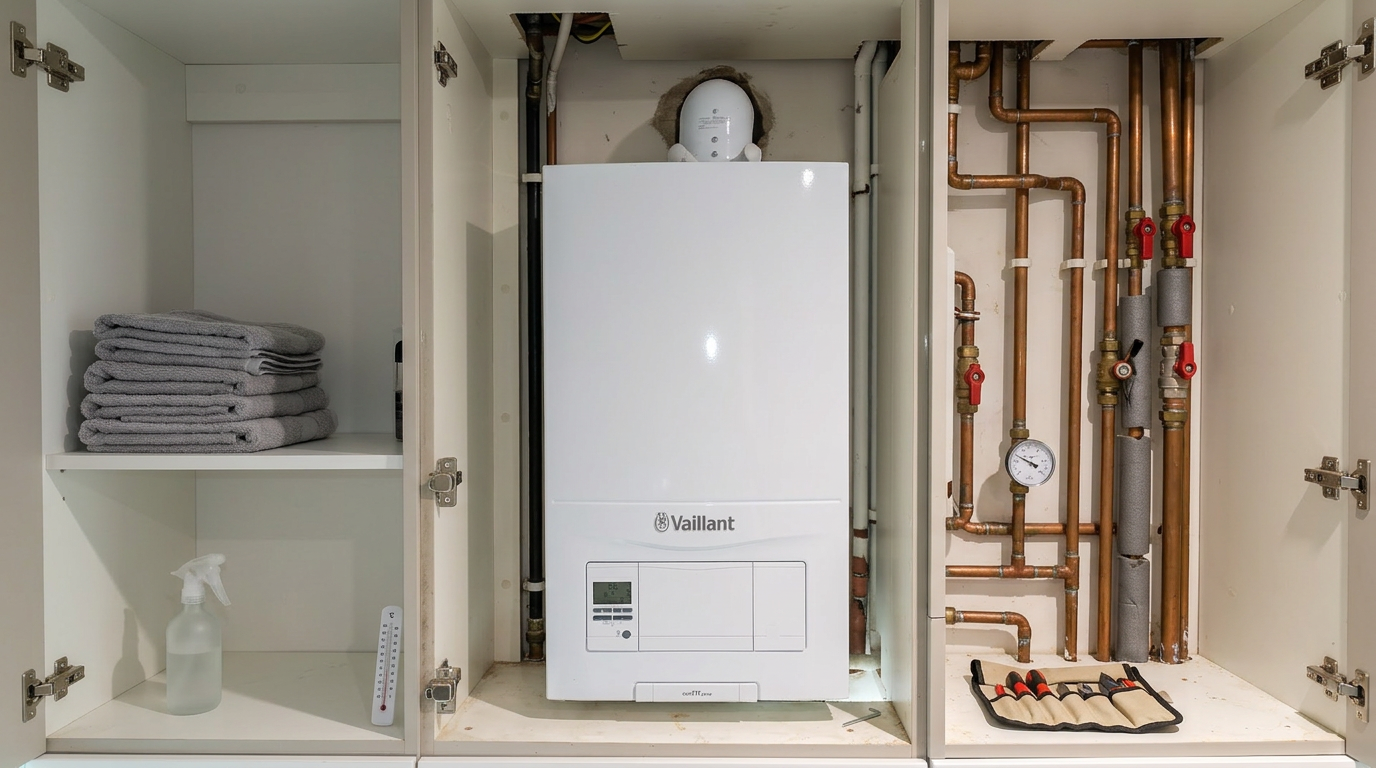
Heat loss from exposed heating pipes, particularly in unheated areas like basements, lofts, or utility rooms, can be a significant source of wasted energy. Insulating these pipes with foam lagging helps to retain heat within the system, ensuring more of the energy generated by your boiler reaches your radiators and hot water cylinder. This is a straightforward and inexpensive DIY task that can contribute to a more efficient heating system. Inspect your pipework and consider adding insulation where it is currently lacking.
- Lag pipes in unheated spaces.
- Reduce heat loss before it reaches radiators.
- Easy and cost-effective home improvement.
Optimising Hot Water Scheduling and Cylinder Settings
If you have a hot water cylinder, its settings can also impact your energy consumption. Similar to space heating, scheduling your hot water to be heated only when you need it avoids heating water unnecessarily. The cylinder thermostat, typically located on the side of the hot water tank, controls the temperature of the stored water. Setting this to a suitable temperature, often around 60 degrees Celsius, is generally sufficient for hygiene and comfort without overheating, which wastes energy. Do not attempt to adjust internal boiler components; focus on external controls.
- Schedule hot water for peak demand times.
- Set cylinder thermostat to an efficient temperature.
- Never attempt internal boiler adjustments.
Common questions
Can I adjust my boiler's internal settings myself?+
It is crucial that only a Gas Safe registered engineer works on the internal components of your boiler or touches any gas parts. Attempting to do so yourself can be dangerous and could void your boiler's warranty. Focus on external controls like thermostats, programmers, and radiator valves. For any internal adjustments or checks, always contact a qualified professional like Brogas in Wigan.
How often should I have my boiler serviced?+
For optimal efficiency, safety, and to help identify potential issues before they become major problems, it is recommended to have your boiler serviced annually by a Gas Safe registered engineer. Regular servicing ensures your boiler is operating as efficiently as possible, which can contribute to lower running expenses and prolong its lifespan.
What is a TRV and how does it help?+
A Thermostatic Radiator Valve (TRV) allows you to control the temperature of individual radiators. Instead of heating every room to the same level, TRVs enable you to set different temperatures in different rooms. For example, you can lower the temperature in guest rooms or rooms you use less frequently, thereby reducing energy waste.
Does turning the heating off completely save money?+
While turning off your heating when you are away can save energy, letting your home get too cold can sometimes lead to issues like damp or frozen pipes. For short periods, it might be more efficient to lower the temperature slightly rather than turning it off completely, allowing your boiler to work less hard to bring the temperature back up from very cold.
When should I consider a boiler replacement?+
If your current boiler is old, frequently breaks down, or has poor efficiency ratings despite adjustments, a replacement might be a long-term consideration. A Gas Safe registered engineer from Brogas can assess your current system and advise on its condition and potential efficiency gains from a newer model, helping you make an informed decision.
Need Help Optimising Your Boiler in Wigan?
Brogas is a Gas Safe registered plumbing and heating business covering Wigan and surrounding towns. Contact us for professional assistance.