
Next-day callout slots available for Wigan & surrounding areas

Leigh FAQs — no hot water but heating works — parts, labour and what drives the cost

Is it always the diverter valve if heating works but no hot water?+

In the vast majority of cases for a combination boiler, yes. The diverter valve is responsible for directing heat to either the central heating or the hot water. If the heating works, it means the boiler's burner and pump are generally functional, pointing to an issue with this specific component or related sensors.

How can I tell if my diverter valve is stuck or the motor is faulty?+

Without opening the boiler casing, it's difficult to be certain. A trained Brogas engineer will first check the boiler's fault codes, then manually test the actuator's movement and listen for sounds. A motor fault often prevents the valve from moving at all, while a stuck valve might show the motor attempting to move it without success.

Could a blocked plate heat exchanger cause this symptom?+

Yes, absolutely. The plate heat exchanger transfers heat from the boiler's primary circuit to your domestic hot water. If it's scaled or sludged internally, the heat transfer won't occur effectively, leading to cold or lukewarm water at your taps even if the boiler is firing correctly for hot water demand.

What is an NTC sensor and how does it relate to this fault?+

An NTC (Negative Temperature Coefficient) sensor measures water temperature. If the hot water NTC sensor is misreading the temperature, it might tell the boiler that the water is already hot enough when it isn't, causing the boiler to stop firing for hot water or not fire at all, even when there's a demand.

Typical no hot water but heating works — parts, labour and what drives the cost work in Leigh

For Leigh householders and landlords dealing with parts, labour and what drives the cost. Local housing stock — red-brick terraces around Leigh town centre and newer estates toward Pennington — shapes how this work is carried out.

  • Understanding why radiators are hot but taps are cold.
  • Identifying the most likely boiler components involved.
  • Estimating labour time for specific part replacements.
  • Factors influencing the overall cost of the repair.
  • Steps for preventing future similar breakdowns.

Diagnosing the 'No Hot Water, Heating Works' Fault

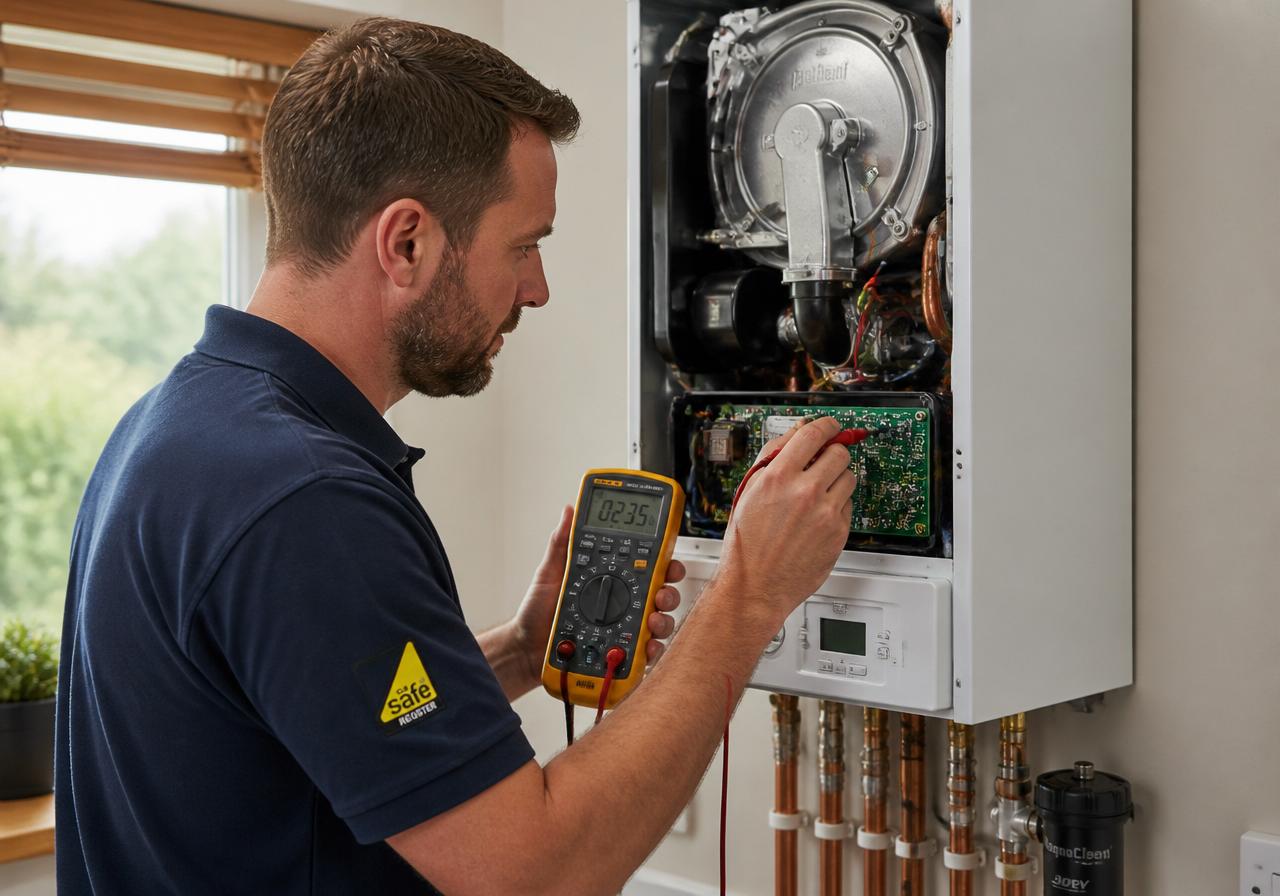
For us, diagnosing this fault is methodical. We first confirm that the boiler is receiving a demand signal for hot water. If it is, the next step is to check the diverter valve actuator for movement. If the actuator moves but hot water isn't produced, we'll then investigate the flow through the plate heat exchanger, looking for blockages or scaling. Finally, we'd examine the hot water NTC sensor for accurate temperature readings. This systematic approach ensures we pinpoint the exact problem efficiently, rather than replacing parts speculatively.

  • Confirm hot water demand signal
  • Check diverter valve actuator movement
  • Inspect plate heat exchanger for flow/blockages
  • Verify hot water NTC sensor accuracy

Parts, Labour & Cost Factors for This Repair

The most common culprit is a diverter valve cartridge, which can wear or get stuck. Replacing this usually involves draining part of the system and can take 1.5-3 hours depending on boiler access and age. If the diverter actuator motor has failed, that's often a quicker swap, typically 1-2 hours. A domestic hot-water flow sensor or NTC sensor replacement is usually straightforward, around 1 hour of labour. The most involved repair is a scaled or sludged plate heat exchanger, which can require chemical cleaning or replacement, pushing labour closer to 2-4 hours, especially on older systems common in Leigh's red-brick terraces where maintenance might have been less frequent.

  • Diverter valve cartridge (1.5-3 hours labour)
  • Diverter actuator motor (1-2 hours labour)
  • Flow sensor/NTC sensor (approx. 1 hour labour)
  • Plate heat exchanger (2-4 hours labour for clean/replace)

Minimising Future 'No Hot Water' Issues

While some component failures are simply due to age or wear, maintaining your heating system correctly can reduce the risk. Regular servicing by a Gas Safe registered engineer helps identify potential issues early, such as sludge build-up before it impacts the plate heat exchanger or issues with diverter valve operation. Ensuring your system water quality is maintained with suitable inhibitors can also prolong the life of these internal components. We can advise on best practices specific to your boiler and system type during a service visit.

  • Annual boiler servicing by a Gas Safe engineer
  • Maintain system water quality with inhibitors
  • Address minor issues before they become major faults
  • Consider system flush if sludge is recurrent

Nearby areas we also cover

Why locals choose Brogas here

As a Gas Safe registered business, Brogas diagnoses your boiler issue systematically. We trace the fault from demand signal to component failure. You'll receive a clear explanation of the repair needed, including parts and estimated labour.

In summary

If you have no hot water but working heating, the fault is typically with the diverter valve or related components. Brogas focuses on specific diagnosis to determine parts, labour, and repair cost factors, especially for Leigh's diverse housing stock.

Request a Leigh quote

Free · No obligation

Get Your Free Quote

We'll respond the same working day.

We reply to every enquiry within one working day.