
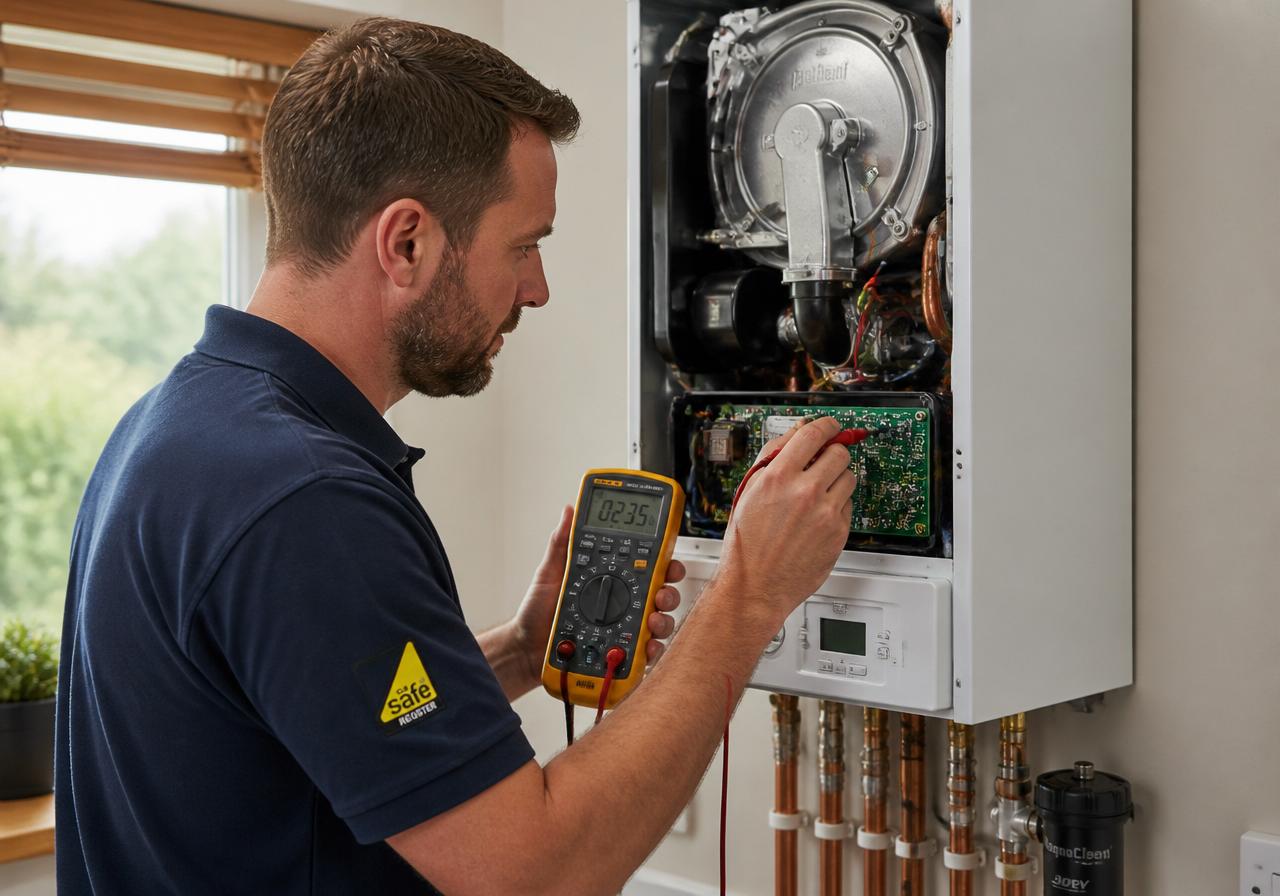
The short version
- Obsolete parts are the strongest argument for replacement
- Two significant repairs in a heating season usually signals the end
- A heat exchanger or PCB failure on an out-of-warranty boiler rarely pays back
- A cheap repair that keeps a working boiler alive is nearly always worth doing
Questions we work through with you
We give you the information and let you decide rather than pushing a sale.
- Is the failed part still available, and how long is the lead time?
- What's the repair cost against the cost of the replacement you'd choose?
- How many faults has this boiler had in the last two years?
- Is the appliance still under any manufacturer warranty?
- Is the rest of the system healthy, or is sludge causing the failures?
When repair is clearly right
Common wear items — diverter cartridges, pressure sensors, fans, pumps, thermistors, expansion vessels — are usually economic on any boiler that's otherwise behaving. If the appliance has a clean history, fixing it and servicing it annually is the sensible route.
When replacement is clearly right
Primary heat exchanger failure, repeated PCB faults, or an obsolete part with no supply chain. At that point the money goes into an appliance that owes you nothing rather than one with a new warranty.
The middle ground
If your boiler works but is nearing the end, plan the replacement for spring or summer rather than being forced into it in December. You get better appointment times and a calmer decision.
Common questions
Will you tell me if a repair isn't worth it?+
Yes — we'd rather lose a repair than sell you one that fails again in six weeks.
Can you diagnose before I commit?+
We diagnose first and quote the repair before doing the work.
Do you carry common parts?+
Common wear parts for the major brands travel on the van, so a lot of faults are a first-visit fix.
Is an old boiler unsafe?+
Age alone isn't unsafe. We test combustion and safety devices and tell you plainly if there's a problem.
Get an honest diagnosis first
We'll tell you what's wrong and what it costs before you decide anything.