
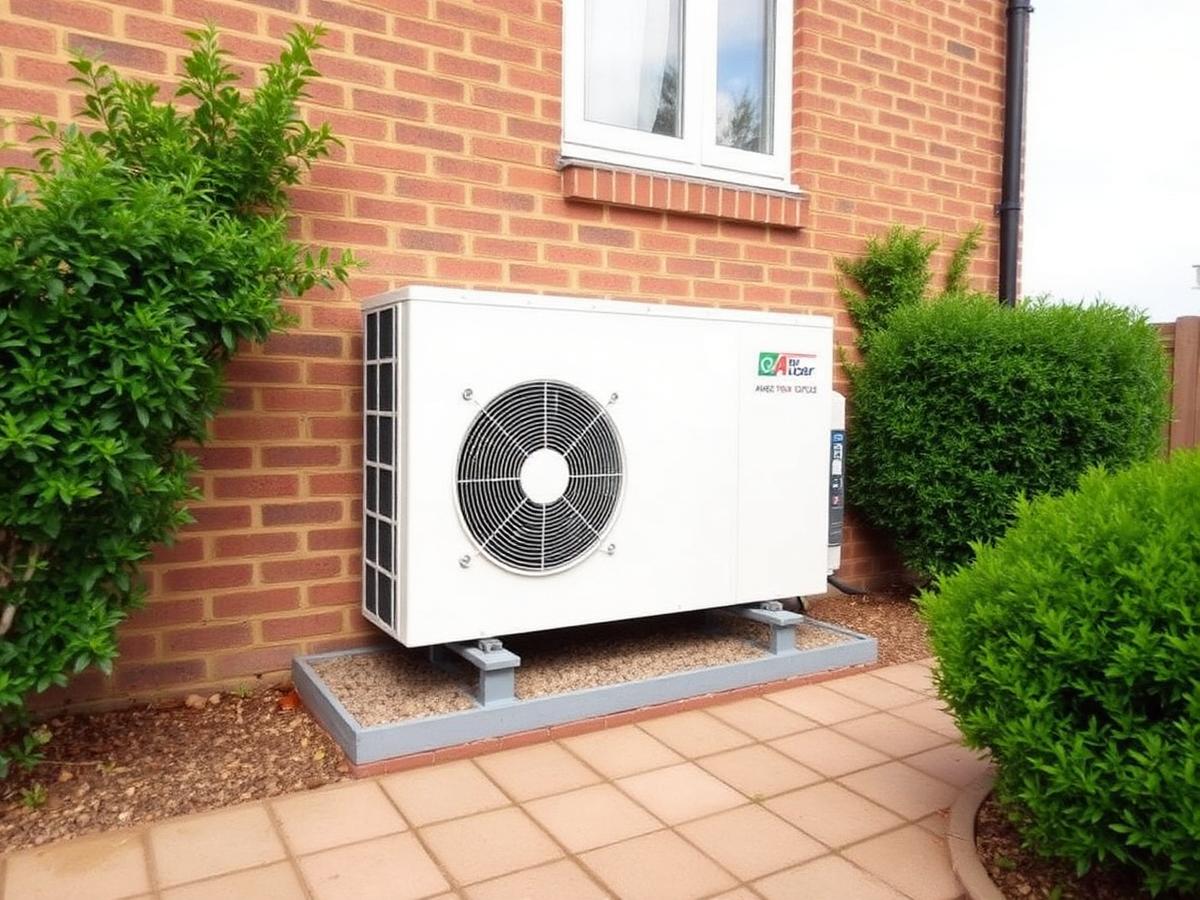
The short version
- Noise levels are a key factor in heat pump placement.
- Adhere to permitted development rules for England.
- Maintain necessary clearances from boundaries.
- Consider neighbours early in your planning.
- Strategic siting directly impacts heat pump efficiency.
Understanding Air Source Heat Pump Noise Levels
Air source heat pumps contain a fan and compressor, which generate a certain level of operational noise. While modern units are designed to be quieter than older models, noise levels are a primary consideration for siting. Most units operate within a range similar to a refrigerator or a quiet air conditioning unit. However, factors like proximity to quiet areas, reflecting surfaces, and the overall design of the unit can influence the perceived noise. Our aim is always to minimise disturbance, both for you and your neighbours, by selecting the most appropriate location for the outdoor unit on your property.
- Modern units are engineered for low noise output.
- Decibel ratings are available for specific models.
- Consider proximity to bedrooms and seating areas.
- Reflecting surfaces can amplify sound.
Permitted Development Conditions in England
In England, air source heat pumps are generally considered permitted development, meaning they do not require full planning permission, provided specific conditions are met. These conditions relate to the size and placement of the unit. The external unit must not be installed on a wall or roof slope that faces a highway, if it's the principal elevation. There are also restrictions on its size and how close it can be to the property boundaries. Exceeding these limits, or if your property is in a conservation area or is a listed building, may necessitate a planning application.
- No planning permission usually needed for permitted development.
- Conditions apply to unit size and location.
- Check rules for conservation areas or listed buildings.
- Units must not be visible from a highway on a principal elevation.
Critical Distances to Property Boundaries
When installing an air source heat pump, maintaining appropriate distances from property boundaries is essential, not just for permitted development compliance but also for operational efficiency and neighbourly considerations. Permitted development rules typically stipulate a minimum distance from boundaries. This clearance allows for sufficient airflow around the unit, which is vital for its performance. Restricted airflow can reduce efficiency and potentially increase operational noise as the fan works harder. Proper distance also helps mitigate any noise impact on adjacent properties, maintaining good relations with neighbours.
- Permitted development sets minimum boundary distances.
- Adequate clearance ensures optimal airflow.
- Restricted airflow reduces efficiency and increases noise.
- Consider distance from neighbouring windows and doors.
Neighbour Considerations and Mitigation Strategies
Engaging with your neighbours early in the planning process is a proactive step that can prevent future issues. While air source heat pumps are generally quiet, perception of noise is subjective. We can help you identify the quietest locations on your property. If a less ideal location is unavoidable, mitigation strategies such as acoustic screening, careful planting, or strategic placement away from sensitive areas can be employed. Our approach is to find a balance between optimal performance for your home and minimising any potential disturbance to those nearby, fostering a positive outcome for all.
- Communicate installation plans with neighbours.
- Objective noise levels can differ from subjective perception.
- Acoustic screening can reduce noise transmission.
- Strategic planting can also help buffer sound.
How Siting Affects Air Source Heat Pump Performance
The physical placement of your air source heat pump significantly impacts its efficiency and lifespan. The unit needs a consistent supply of unobstructed airflow to function correctly. Positioning it in a confined space, or too close to walls or vegetation, can restrict this airflow, forcing the unit to work harder and consume more electricity. Additionally, avoiding areas prone to excessive shade or direct, prolonged exposure to harsh winds can contribute to more stable and efficient operation. Proper siting ensures your investment delivers the heating performance you expect.
- Unobstructed airflow is critical for efficiency.
- Confined spaces reduce performance and increase running costs.
- Avoid areas of persistent deep shade.
- Shelter from strong winds can improve stability.
Professional Installation and Gas Safety
Installing an air source heat pump involves complex plumbing and electrical work, requiring specialist skills. Furthermore, if your installation involves interaction with an existing gas heating system, it is vital that any work on gas components is strictly carried out by a Gas Safe registered engineer. Never attempt to remove boiler casings or adjust gas pipes yourself. Brogas is a Gas Safe registered business operating in Wigan and surrounding towns, ensuring all work on gas appliances is performed safely and competently, adhering to the highest industry standards for your peace of mind.
- Heat pump installation requires specialist plumbing and electrical expertise.
- Any work on gas components is strictly for Gas Safe registered engineers.
- Do not attempt to modify gas appliances or pipework yourself.
- Brogas holds Gas Safe registration for all relevant work.
Common questions
Is an air source heat pump noisy in operation?+
Modern air source heat pumps are designed for quiet operation, typically generating sound levels comparable to a refrigerator or a quiet air conditioning unit. Specific decibel ratings are available for each model. Siting the unit carefully, away from quiet areas and reflective surfaces, further helps to minimise any perceived noise for both you and your neighbours.
Do I need planning permission for an air source heat pump?+
In England, air source heat pumps are generally considered permitted development, meaning full planning permission is not required if certain conditions are met. These conditions relate to the unit's size, its placement on your property, and its distance from boundaries. However, properties in conservation areas or listed buildings may have different requirements.
How close can an air source heat pump be to my neighbour's fence?+
Permitted development rules for England specify minimum distances for heat pumps from property boundaries. These distances are in place to ensure adequate airflow around the unit for optimal performance and to minimise potential noise impact on adjacent properties. Adhering to these clearances is crucial for compliance and neighbourly relations.
Can I install an air source heat pump myself?+
Installing an air source heat pump is a complex process involving specialist plumbing, electrical, and refrigeration skills. It is not a DIY task and should always be undertaken by qualified professionals. If the installation interacts with existing gas appliances, only a Gas Safe registered engineer can work on the gas components, ensuring safety and compliance.
What happens if my heat pump is poorly sited?+
Poor siting can significantly impact the heat pump's efficiency, leading to higher running costs and reduced performance. Restricted airflow, placement in deep shade, or exposure to harsh winds can force the unit to work harder. Additionally, improper placement can lead to increased noise perception for residents or neighbours, potentially causing inconvenience.
Professional Air Source Heat Pump Siting & Installation
For expert advice and compliant installation of your air source heat pump in Wigan and surrounding areas, contact Brogas.