
The short version
- Turn the boiler off and isolate the water supply first
- Never let water run onto the electrics inside the casing
- Leaks from the bottom pipework are usually joints or valves
- Water inside the case means stop using it and call an engineer
First three minutes
Switch the boiler off at the fused spur, close the isolation valves beneath it if accessible, and catch the water. If water is coming out of the casing itself, don't switch it back on.
What the location suggests
Different leak points mean different repairs.
- Bottom connections — compression joints, isolation valves or the filling loop
- Outside discharge pipe — the pressure relief valve is doing its job or has failed
- Inside the case — heat exchanger, pump seal, auto air vent or diverter body
- Around a radiator instead — valve gland or the panel itself, not the boiler
What we do on arrival
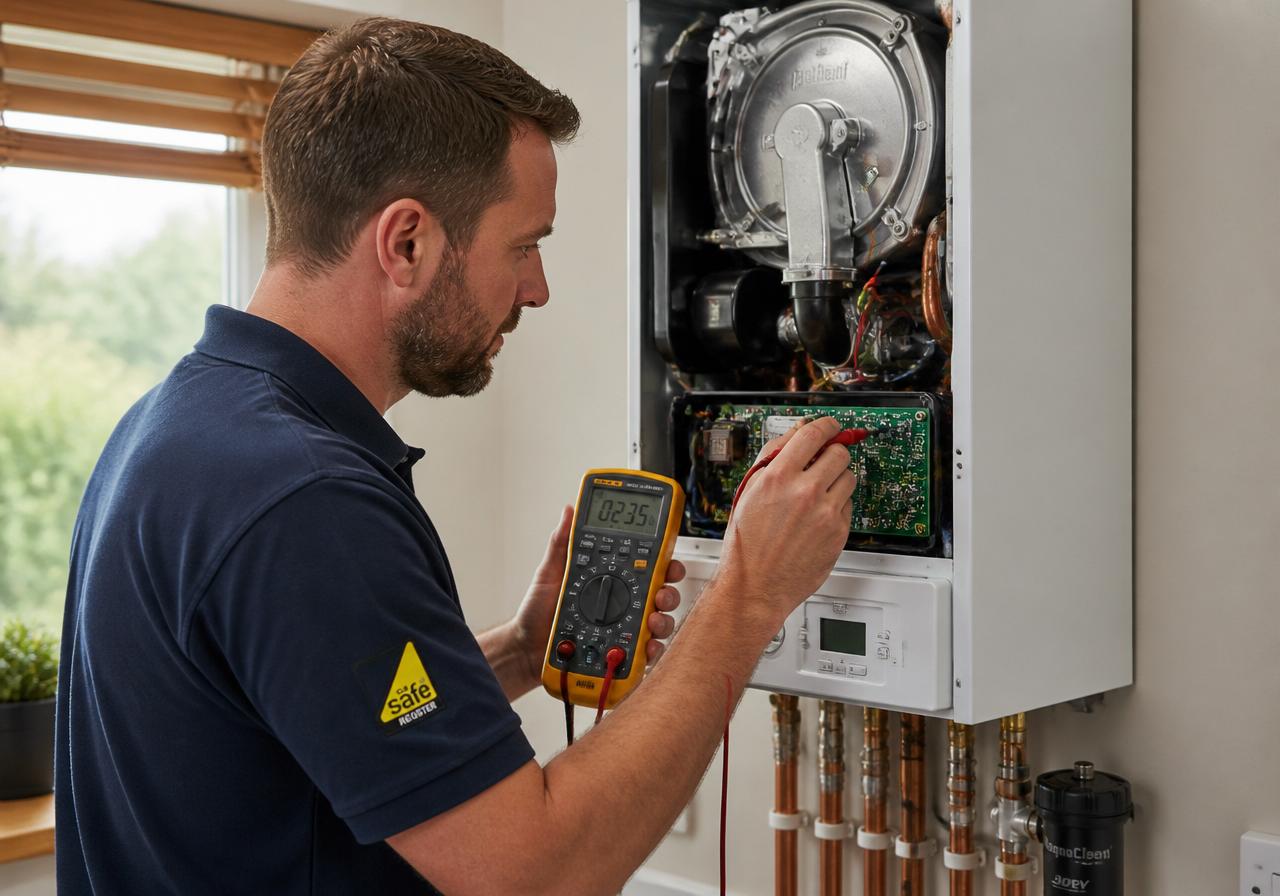
Trace and prove the source, isolate the affected component, then quote the repair. Pump seals, air vents and valves are routine parts. A leaking heat exchanger on an out-of-warranty boiler is the point where we'd talk about repair versus replacement honestly.
Common questions
Can I keep using the boiler?+
Not if water is inside the casing or touching electrics. Isolate it and call us.
Is a dripping outside pipe an emergency?+
It's the PRV discharging. Not dangerous, but it means the system pressure or vessel needs attention.
Do you repair leaks the same day?+
Common parts are on the van, so many leaks are a first-visit fix.
Will my home insurance cover it?+
That depends on your policy — we can provide a written report of the fault and repair.
Boiler leaking water?
Isolate it, then call us — we'll trace the source properly.