
Next-day callout slots available for Wigan & surrounding areas

The Usual Suspects: Most Common Pressure Loss Causes

From our experience in Wigan and surrounding areas, the overwhelming majority of boiler pressure loss issues stem from a failed or under-charged expansion vessel. This component is designed to accommodate the expansion of water as it heats up. When it's not working correctly, the pressure gauge can swing wildly, or the safety valve might discharge water, leading to perceived pressure loss. We confirm this by repressurising the vessel, and if it fails to hold, we recharge or replace it. It's by far the most frequent cause, accounting for a large percentage of our call-outs for this fault.

  • Failed or under-charged expansion vessel (most common)
  • Weeping pressure relief valve (PRV)
  • Small leaks at radiator valves or towel rails

Moving Down the List: Less Frequent, More Involved

Next on the list, though less common than expansion vessel issues, are weeping pressure relief valves (PRV) or minor leaks at radiator valve glands or towel rail joints. A PRV that's passing water, even slowly, will lead to pressure drop. We check the discharge pipe, usually outside, for evidence of continuous or intermittent water discharge. Small, persistent drips from radiator valves or towel rail connections can also lead to pressure loss over time. These are often visible or leave tell-tale signs. We inspect all accessible connections thoroughly to confirm these smaller leaks.

  • External discharge from pressure relief valve
  • Visible drips from heating components
  • Evidence of water around radiators or pipework

The Infrequent But Stubborn: Buried Leaks and Boiler Faults

The least common, but often most challenging, cause is a buried pipework leak under a floor. This is particularly relevant in older terraced properties across Leigh where pipework might be older and less accessible. We only begin to consider this after ruling out all other possibilities, as diagnosing it involves more invasive techniques. Another infrequent cause is an auto air vent passing on the boiler itself. We confirm this by isolating the boiler and checking for moisture around the vent. Guessing at these faults wastes time and money, so our diagnostic process is systematic.

  • Buried pipework leak under flooring
  • Auto air vent fault within the boiler
  • These are diagnosed after other causes are eliminated

Typical boiler losing pressure — root causes ranked by how often we see them work in Leigh

For Leigh householders and landlords dealing with root causes ranked by how often we see them. Local housing stock — red-brick terraces around Leigh town centre and newer estates toward Pennington — shapes how this work is carried out.

  • Boiler needs topping up every few days
  • Pressure gauge fluctuates widely
  • Water seen discharging from external pipe
  • Damp patches appearing around radiators
  • Heating system constantly loses pressure

Why locals choose Brogas here

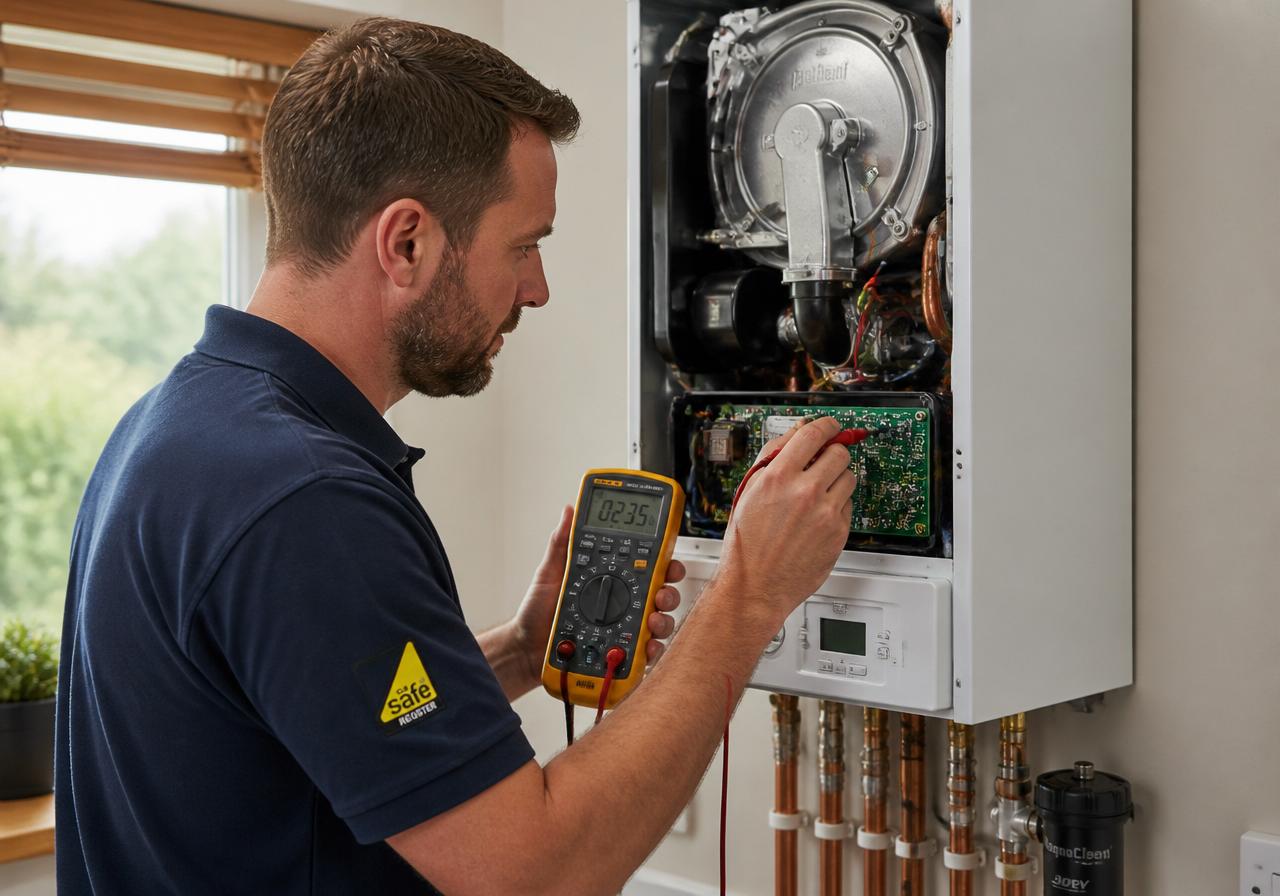
As Brogas, a Gas Safe registered business, we follow a rigorous diagnostic process. We pressure-test components, visually inspect all accessible pipework and fittings, and use appropriate tools to confirm the exact cause. You are left with a clear understanding of the fault and the necessary repair.

Leigh FAQs — boiler losing pressure — root causes ranked by how often we see them

Why shouldn't I just keep topping up my boiler?+

Constantly topping up your boiler is a sign of an underlying issue, not a fix. Water is escaping the system somewhere. Ignoring it can lead to further damage, increased water bills, and potentially more costly repairs down the line if a leak goes unaddressed.

What is an expansion vessel and why is it important?+

An expansion vessel manages the pressure in your sealed heating system. As water heats up, it expands. The vessel absorbs this expansion, preventing excessive pressure build-up. If it fails or is under-charged, pressure can fluctuate erratically or discharge through the safety valve.

How do you check for a buried pipework leak?+

We only investigate buried leaks after systematically ruling out all more common and accessible causes. Our methods can include thermal imaging, acoustic leak detection, or in some cases, localised exposure of pipework. It's a last resort due to its complexity.

My boiler is relatively new, can it still lose pressure?+

Yes, even new boilers can lose pressure. While a component failure might be less likely, issues like an under-charged expansion vessel from installation, a faulty pressure relief valve, or even a small manufacturing defect can still lead to pressure loss in newer systems.

In summary

Boiler losing pressure often points to an expansion vessel issue, followed by PRV or minor leaks. Buried leaks are less common. We diagnose systematically to find the true cause.