
Next-day callout slots available for Wigan & surrounding areas

Ashton-in-Makerfield FAQs — boiler short cycling — parts, labour and what drives the cost

Why does short cycling burn more gas?+

When a boiler frequently starts and stops, it repeatedly goes through a firing sequence, which is less efficient than a steady, continuous run. Each ignition consumes more gas than maintaining an established flame, leading to higher overall consumption for the same amount of heat delivered.

Can I diagnose short cycling myself?+

You can observe the symptom – the boiler turning on and off quickly. However, diagnosing the precise cause, such as flow restrictions, pump issues, or an oversized boiler, requires specialist tools and expertise to accurately measure temperatures, flow rates, and assess system balance.

How long does a short cycling repair typically take?+

The duration varies significantly. A simple re-commissioning might take an hour or two. Clearing a blocked filter could be similar. A more involved process like a power flush or a pump replacement will naturally take several hours. We always aim for an efficient and thorough repair.

What if my boiler is oversized for my home?+

If your boiler is significantly oversized for your property's heat loss, it will reach its target temperature too quickly, leading to short cycling. While we can adjust settings to mitigate this, a long-term solution might involve considering a smaller boiler during replacement, especially for smaller homes in Ashton-in-Makerfield.

Typical boiler short cycling — parts, labour and what drives the cost work in Ashton-in-Makerfield

For Ashton-in-Makerfield householders and landlords dealing with parts, labour and what drives the cost. Local housing stock — Edwardian terraces along Warrington Road and generous 1950s semis toward Bryn — shapes how this work is carried out.

  • Your boiler cycles rapidly despite radiators being cool.
  • Gas bills are higher than expected for the heat output.
  • The boiler turns off almost immediately after firing.
  • System takes a long time to heat up, then switches off.
  • You suspect flow issues within your heating system.

Identifying the Symptoms You See

The most obvious sign of short cycling is the boiler repeatedly turning on and off in quick succession. You might notice your radiators aren't getting as hot as they should, or the heating comes on and goes off rapidly without the house reaching a comfortable temperature. This behaviour is often a clue that something isn't quite right with how the heat is being distributed or absorbed. While it can be tempting to ignore, continued short cycling accelerates wear on ignition components and other parts within the boiler.

  • Boiler ignition and shutdown cycles are very frequent.
  • System struggles to maintain a consistent temperature.
  • Unusual noises from the boiler during operation.
  • Increased gas consumption without improved heating.

Our Diagnostic Process: What We Measure

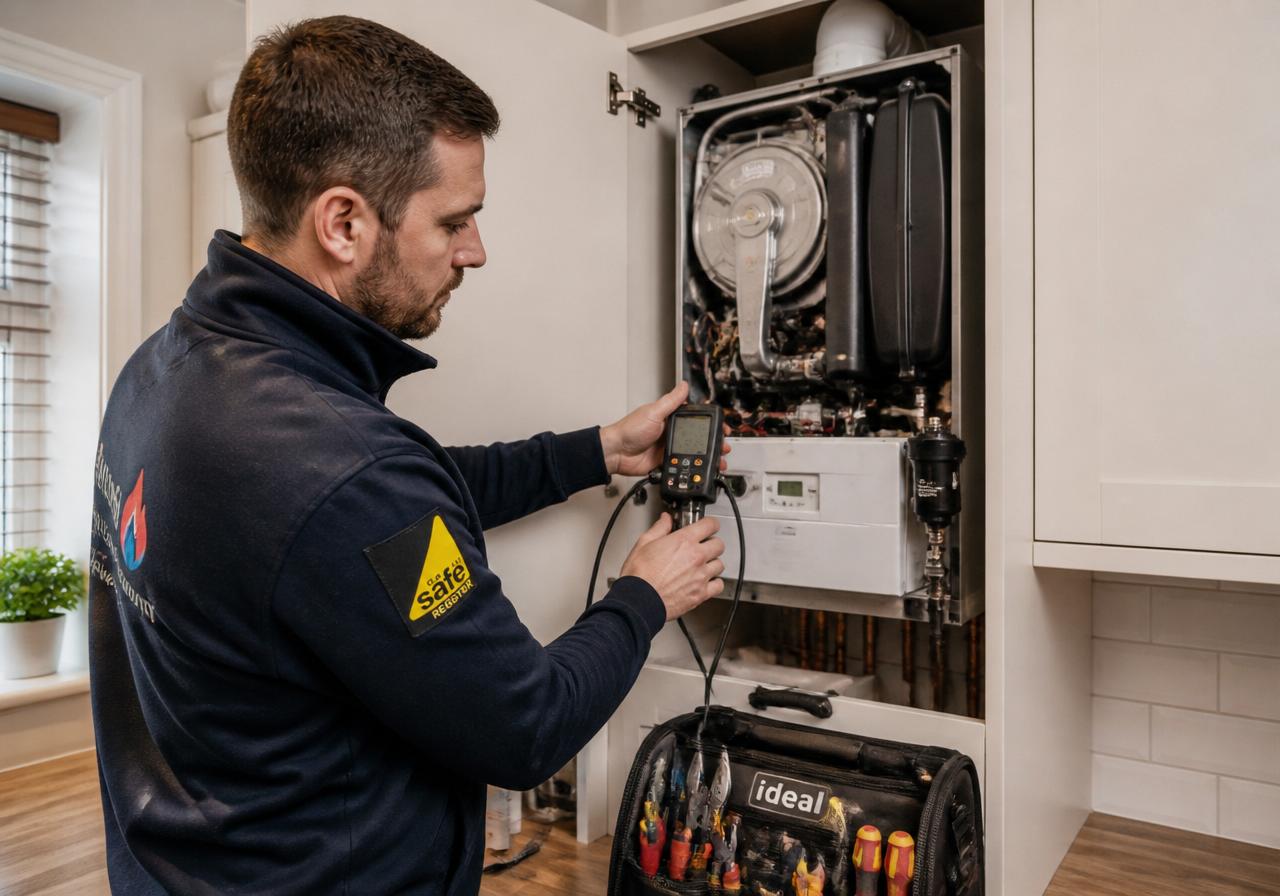
When we investigate short cycling, we use a structured diagnostic process. This involves measuring the differential temperature between the flow and return pipes to assess heat transfer. We'll check the boiler's pump speed settings and confirm that any system bypass is correctly configured and not causing flow issues. We also examine your flow temperature settings. For properties like the Edwardian terraces along Warrington Road, ensuring the system is correctly balanced for the property's heat loss is crucial. Many times, the initial fix is simply a proper re-commissioning of the boiler and system setup, which involves no new parts.

  • Differential temperature across flow and return pipes.
  • Boiler pump speed settings and functionality.
  • Operation of any system bypass.
  • Overall system flow temperature setup.
  • Examination for restricted flow from blockages.

Understanding Repair Costs: Parts & Labour

The cost of resolving short cycling primarily depends on the identified cause. If it's a commissioning issue or a pump speed adjustment, labour is the main factor, as no parts are needed. This type of fix usually takes between one to two hours. If restricted flow is due to a blocked filter, cleaning it is a labour charge, typically an hour or two. A sludged system, however, might necessitate a power flush, which is a more involved, several-hour process. In rarer cases, an incorrectly sized pump might need replacement, adding the cost of the new pump and several hours of labour. Replacement of ignition components or sensors due to accelerated wear would involve the part cost plus an hour or two for fitting. The housing stock in areas towards Bryn, with their 1950s semis, might have older, less efficient systems more prone to sludge build-up, potentially leading to more extensive cleaning work.

  • No parts needed for commissioning adjustments.
  • Filter cleaning: labour charge only.
  • Power flushing: significant labour, no parts.
  • Pump replacement: part cost + several hours labour.
  • Component replacement: part cost + 1-2 hours labour.

Nearby areas we also cover

Why locals choose Brogas here

As a Gas Safe registered business, Brogas ensures every diagnosis is thorough and every repair is to standard. We confirm the issue, explain the cause, and detail the repair process. You are left with a safely operating, efficiently performing heating system.

In summary

Short cycling means your boiler runs inefficiently and wears components. We diagnose causes like flow restriction or oversizing. Costs depend on parts (if needed) and labour, from simple adjustments to power flushing. Call Brogas to resolve it.

Request a Ashton-in-Makerfield quote

Free · No obligation

Get Your Free Quote

We'll respond the same working day.

We reply to every enquiry within one working day.