
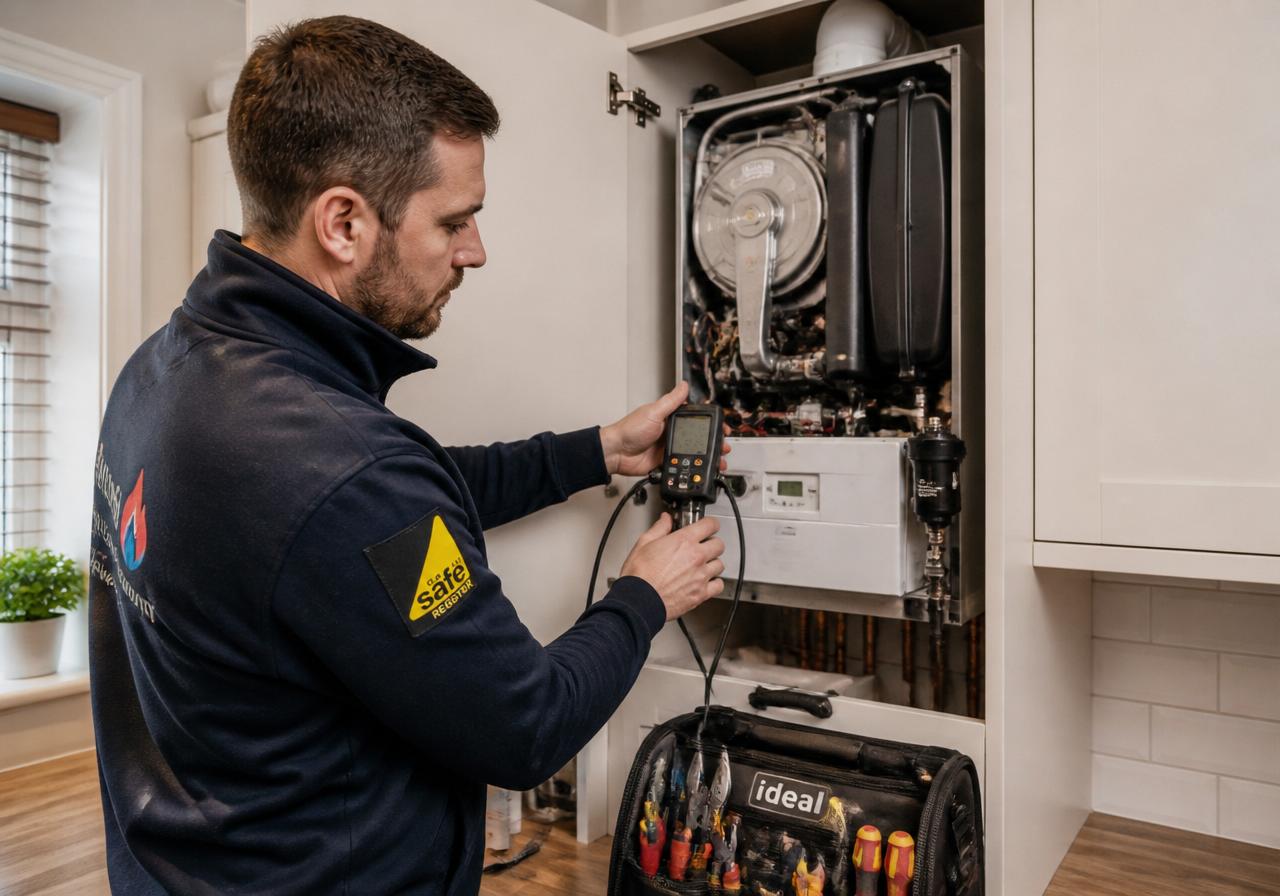
The short version
- A power flush removes sludge and debris from your heating system.
- Specialised equipment and chemicals are used to clean the system.
- The process typically takes a full day, depending on system size.
- Your heating system will be cleaner and more efficient afterwards.
Identifying the need for a power flush
Before any work begins, our Brogas engineer will assess your heating system to confirm if a power flush is indeed the most appropriate solution. Common indicators include cold spots on radiators, noisy boiler operation, excessive venting from radiators, or an increase in your heating bills without a corresponding change in usage. Sometimes, simply bleeding radiators or a chemical flush can resolve minor issues, but persistent problems often point to sludge build-up requiring a more thorough intervention. This initial assessment ensures the correct approach is taken for your home's heating.
- Cold spots on radiators
- Noisy boiler or circulating pump
- Discoloured water during radiator bleeding
Equipment used during a power flush
The core of a power flush operation involves a high-performance power flushing machine. This unit connects directly to your central heating system, usually via a radiator or the pump valves. It circulates water at high velocity but low pressure, dislodging deposits without damaging the system. Various chemicals are introduced at different stages, along with a magnetic filter to capture metallic particles. A heat exchanger protection kit might also be used to safeguard boiler components during the process. Hoses connect the machine to the system and to a waste point.
- Power flushing machine
- Various heating system chemicals
- Magnetic filtration unit
The room by room power flush process
On the day, our engineer will isolate your boiler and hot water cylinder from the system. The power flushing machine is connected, typically to a radiator or the pump. We then flush each radiator individually, starting with the one furthest from the boiler and working our way back. This ensures maximum cleaning effect for every component. Clean water is pumped through, followed by a cleaning chemical, which is then thoroughly rinsed out. The process is repeated until clear water runs from each radiator and the system is clean.
- System isolation from boiler
- Individual radiator flushing
- Thorough chemical rinsing
Chemicals used and their purpose
Several types of chemicals are integral to an effective power flush. A heavy-duty cleaning agent, often acid-based, is introduced to break down rust and sludge. This is circulated for a period to allow it to work thoroughly. Following this, a neutralising chemical is added to safely remove any acidic residues, protecting your system components. Finally, an inhibitor chemical is added to the system. This protective agent helps prevent future corrosion and sludge formation, extending the life and efficiency of your central heating system components.
- Heavy-duty cleaning agent
- Neutralising chemical
- Corrosion inhibitor
Typical time taken for a power flush
The duration of a power flush can vary significantly depending on the size and condition of your central heating system. For a standard three-bedroom house with around 8-10 radiators, the process typically takes a full working day, approximately 6 to 8 hours. Larger properties with more radiators or systems with particularly heavy sludge build-up may require more time. Our engineer will provide an estimated timeframe after the initial assessment, allowing you to plan your day accordingly. It is a thorough process that cannot be rushed.
- Average 6-8 hours for a standard home
- Larger systems may take longer
- Dependent on system condition and sludge build-up
What your system looks like afterwards and when a chemical flush is enough
After a power flush, your heating system will contain clean water treated with an inhibitor. Radiators should heat up evenly, and your boiler should operate more quietly and efficiently. Our Brogas engineer will re-commission the system and check for proper operation. Sometimes, a simpler chemical flush without the high-pressure machine is sufficient for minor build-ups or as preventative maintenance. This involves adding a cleaning chemical to the system and circulating it for a period, then draining and refilling. This is not suitable for heavily sludged systems. If you are unsure, consult a Gas Safe registered engineer. Never attempt to open your boiler casing or touch gas components; this work must only be carried out by a Gas Safe registered engineer.
- Evenly heated radiators, quieter boiler
- System filled with inhibited water
- Chemical flush suitable for minor issues only
Common questions
How often should a central heating system be power flushed?+
The frequency depends on several factors, including the age of your system, the quality of your water, and whether an inhibitor has been consistently maintained. As a general guide, a power flush is usually considered every 5-10 years, or when specific symptoms of sludge build-up become apparent. Regular servicing by a Gas Safe registered engineer can help monitor your system's condition and advise on the appropriate time for a flush.
Will a power flush fix my boiler if it's broken?+
A power flush is designed to clean the central heating system, addressing issues caused by sludge and debris. While it can resolve problems like poor circulation or noisy operation that mimic boiler faults, it cannot fix mechanical or electrical failures within the boiler itself. If your boiler is completely broken, it may require repair or replacement, not just a flush. Our Brogas Gas Safe engineer can diagnose the root cause.
Is a power flush messy or disruptive?+
Our Brogas engineers take great care to minimise disruption and mess. We use protective sheets and ensure all connections are secure. There will be some noise from the power flushing machine and the emptying/refilling of the system. You will need to be home for the duration of the work. While it's a comprehensive process, we aim for a clean and efficient operation, leaving your home as tidy as we found it.
Can I use my heating system during the power flush?+
No, the heating system will need to be turned off and isolated from your boiler for the duration of the power flush. This is essential for the cleaning process to be effective and safe. You will not have central heating or hot water until the process is complete and the system has been re-commissioned by our Gas Safe registered engineer. Please plan accordingly, especially during colder months.
What is a MagnaClean filter, and how does it help?+
A MagnaClean filter (or similar magnetic filter) is a device installed into your heating system, typically near the boiler. It uses powerful magnets to capture black iron oxide (magnetite) sludge particles as they circulate with the system water. While not part of the power flush process itself, installing one afterwards can significantly extend the cleanliness of your system and help prevent future sludge build-up. We can advise on installation.
Restore your central heating efficiency today
Contact Brogas, your Gas Safe registered heating experts in Wigan, for a professional system power flush.