
Next-day callout slots available for Wigan & surrounding areas

The Root Cause: Why Your Boiler is Making Noise

The primary reasons for kettling usually come down to two issues: limescale or sludge. In older properties around Standish, especially those with 1930s plumbing, both can be prevalent. Limescale builds up on the heat exchanger surfaces, creating hot spots where water boils. Magnetite sludge acts similarly, restricting the flow of water and causing localised overheating. Other factors, like a pump running too slowly, a blocked filter, or an imbalanced system, can also contribute by reducing flow to the boiler. Identifying the exact cause dictates the repair strategy and associated costs.

  • Limescale build-up (internal scaling)
  • Magnetite sludge (system contamination)
  • Restricted water flow (pump or filter issues)
  • System imbalance (incorrect radiator settings)

Parts & Labour: What Drives Repair Costs

The cost of resolving boiler kettling or banging is directly tied to the specific diagnosis and the components required. If limescale is the primary issue, a chemical descale of the heat exchanger is often needed. This involves specialist chemicals and labour for flushing and refilling. For sludge, a power flush, which can take a full day depending on system size, might be required, alongside fitting a magnetic filter. If a component like the pump is faulty, replacement parts and the time to fit them contribute significantly. Each scenario demands specific parts and varying labour times.

  • Chemical descaler solution (for limescale)
  • Magnetic filter (for ongoing sludge prevention)
  • Circulation pump (if failing or undersized)
  • Power flushing machine hire (for heavy sludge)

When Costs Escalate: The Exceptions

While most kettling issues are resolved with the above, there are exceptions. If the heat exchanger itself is severely compromised by long-term scaling or sludge, it may require replacement. This is a substantial component, and the labour involved is extensive, making it a considerably more expensive repair. For homes in Standish and across Wigan, especially those with older systems that haven't been regularly serviced or had a magnetic filter installed, this risk is higher. Sometimes, what seems like kettling can also be indicative of an incorrectly sized or poorly installed system, which requires a more in-depth assessment.

  • Heat exchanger replacement (if beyond repair)
  • System re-balancing (if severe flow issues)
  • New pump installation (if current one is inadequate)
  • Advanced system diagnostics (for complex issues)

Typical boiler kettling or banging — parts, labour and what drives the cost work in Standish

For Standish householders and landlords dealing with parts, labour and what drives the cost. Local housing stock — 1930s bay-fronted semis on Rectory Lane and newer estates off Almond Brook Road — shapes how this work is carried out.

  • You're hearing a boiling kettle sound from your boiler.
  • Your boiler makes banging or rumbling noises.
  • You've noticed reduced heating efficiency and noise.
  • Your boiler is old and hasn't been serviced regularly.
  • You're considering what the repair might involve and cost.

Why locals choose Brogas here

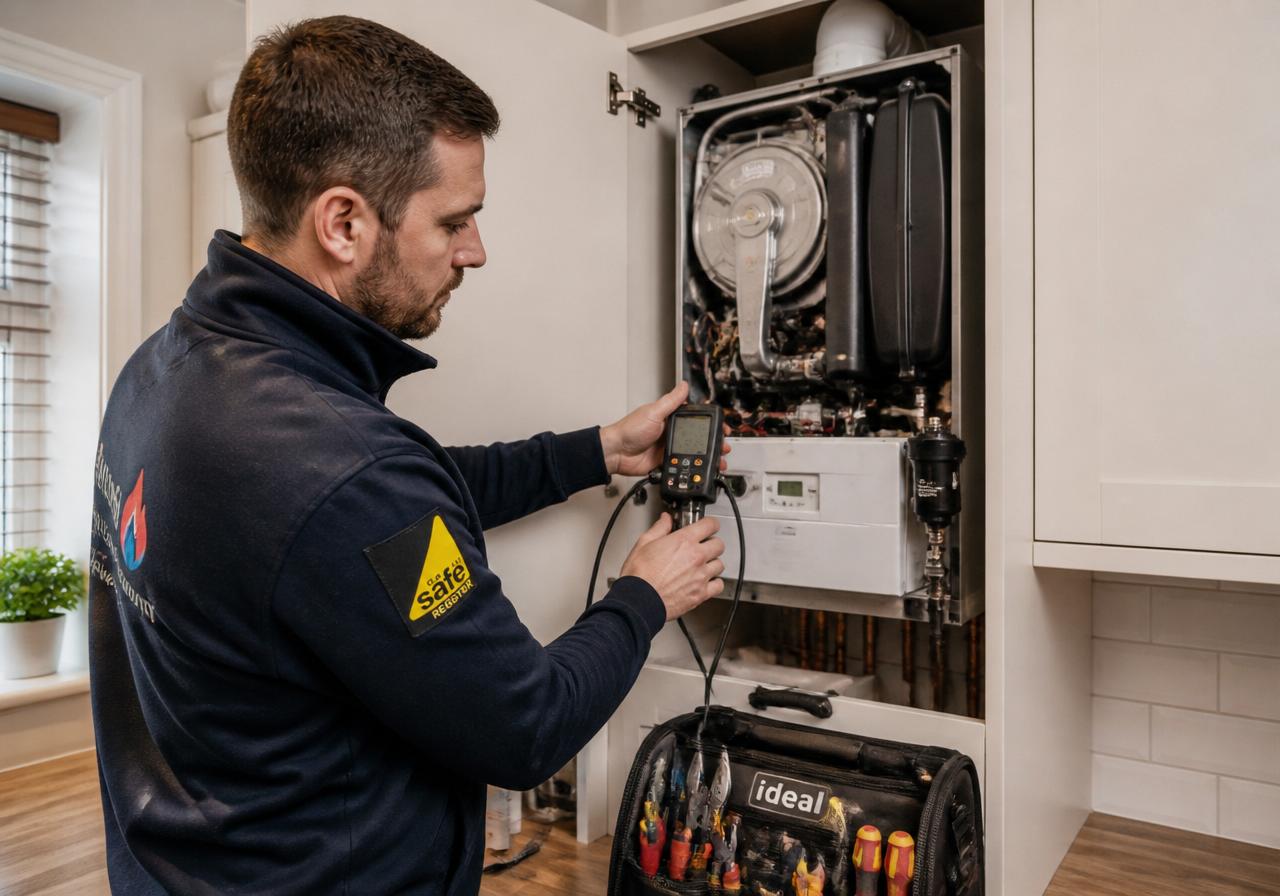
Brogas is a Gas Safe registered plumbing and heating business covering Wigan and the surrounding towns. We diagnose the root cause of boiler kettling using flow rate and differential temperature checks, and provide a transparent explanation of the necessary parts and labour. You are left with a quiet, efficient heating system.

Standish FAQs — boiler kettling or banging — parts, labour and what drives the cost

Can I fix boiler kettling myself?+

No. Diagnosing and repairing boiler kettling requires specialist tools and Gas Safe registration. Incorrect interventions can cause further damage, void warranties, and pose safety risks. It's crucial to have a qualified engineer assess and fix the problem correctly.

How long does a kettling repair typically take?+

The duration varies. A chemical descale might take a few hours. A power flush, if needed, can take a full day. Replacing a component like a pump is usually a half-day job. A full heat exchanger replacement is more extensive, often requiring a full day or more.

Does my boiler warranty cover kettling?+

Manufacturer warranty coverage for kettling depends on the model and whether regular servicing has been maintained. Often, issues caused by system contamination or lack of maintenance are excluded. Check your specific boiler documentation and registration details for clarity.

What's a scale reducer, and do I need one?+

A scale reducer is a device fitted to your mains water supply that helps prevent limescale build-up within your heating system and other appliances. If you're in a hard water area, such as parts of Wigan, and your boiler has suffered from scaling, fitting one is a durable preventive measure.

In summary

Boiler kettling or banging signals internal overheating due to scale or sludge. Repair involves specific parts and labour, from descaling to power flushing, with costs driven by the extent of the problem and components needed. Ignoring it risks expensive heat exchanger failure.