Next-day callout slots available for Wigan & surrounding areas

Leigh FAQs — boiler pressure too high — root causes ranked by how often we see them

Why does my boiler pressure keep rising even after I've bled radiators?+

If your boiler pressure keeps rising after bleeding radiators, it strongly suggests an ongoing ingress of water into the sealed system. This most commonly points to either a filling loop that isn't fully shut off or a faulty plate heat exchanger allowing mains water to enter the heating circuit. We'd investigate these two points first during a diagnostic visit.

Can I just reduce the pressure myself if it's too high?+

You can temporarily reduce pressure by bleeding a radiator or using the filling loop's drain point, but this only addresses the symptom, not the root cause. If the underlying fault (like a passing filling loop or failed expansion vessel) isn't fixed, the pressure will simply rise again. It's crucial to identify and repair the source of the problem to prevent recurrence and potential damage.

How quickly should the pressure rise if my expansion vessel has failed?+

If your expansion vessel has completely failed, you'll typically notice a rapid increase in pressure as the boiler heats up, often exceeding safe limits quickly. This is because there's no component to absorb the thermal expansion of the water. The pressure might drop back down significantly once the system cools. We test the vessel when the system is cold to confirm its functionality.

What's the difference between a high-pressure lockout and a normal pressure drop?+

A high-pressure lockout is a safety mechanism where the boiler detects dangerously high system pressure and shuts down to prevent damage. This is distinct from a normal pressure drop due to minor leaks or air in the system, which typically leads to the boiler eventually failing to fire. A high-pressure lockout indicates an active problem of too much water or unmanaged expansion within the system.

Typical boiler pressure too high — root causes ranked by how often we see them work in Leigh

For Leigh householders and landlords dealing with root causes ranked by how often we see them. Local housing stock — red-brick terraces around Leigh town centre and newer estates toward Pennington — shapes how this work is carried out.

  • Boiler pressure gauge near the red mark
  • Water dripping from an external overflow pipe
  • Boiler locking out with a high-pressure fault code
  • Having to frequently repressurise your boiler downwards
  • Noticing a consistent increase in system pressure

Identifying the Most Common Cause: The Filling Loop

The most frequent reason for high boiler pressure is a filling loop that's been left connected and is slightly passing water into the system. This often happens after a system top-up. Even a tiny trickle over time will increase your system pressure. We confirm this by inspecting the filling loop connection and checking if pressure continues to rise after the boiler has cooled and the system has been bled. This is often an easy fix, involving disconnecting or replacing a faulty filling loop.

  • Filling loop left connected
  • Filling loop valve failing to seal
  • System pressure rises slowly over time

Failed Expansion Vessel: A Frequent Culprit

After the filling loop, a failed expansion vessel is the next most common cause. The expansion vessel is designed to absorb the increase in water volume as the system heats up. If it's lost its air charge or the diaphragm inside has failed, it can't perform this function, leading to excessive pressure. We diagnose this by checking the vessel's charge pressure when the system is cold and depressurised. If the charge is low or non-existent, the vessel requires repressurising or replacement.

  • Expansion vessel charge low
  • Vessel diaphragm failed
  • Pressure increases rapidly when heating

Less Common but Critical: PRV & Plate Heat Exchanger

Less frequently, but still significant, we find a damaged pressure relief valve (PRV) seat, causing it to pass water and contribute to pressure issues, or a fault with the plate heat exchanger. The PRV is a safety device; if it's passing, it indicates either an underlying overpressure issue or a fault with the valve itself. A failing plate heat exchanger in a combi boiler can allow mains water to cross-contaminate the sealed heating system, leading to pressure spikes. We confirm a plate exchanger fault by isolating circuits and observing pressure changes, as well as checking system water for mains-related pressure increases.

  • Pressure relief valve seat damaged
  • Plate heat exchanger internal leak
  • System pressure rises even when cold

Nearby areas we also cover

Why locals choose Brogas here

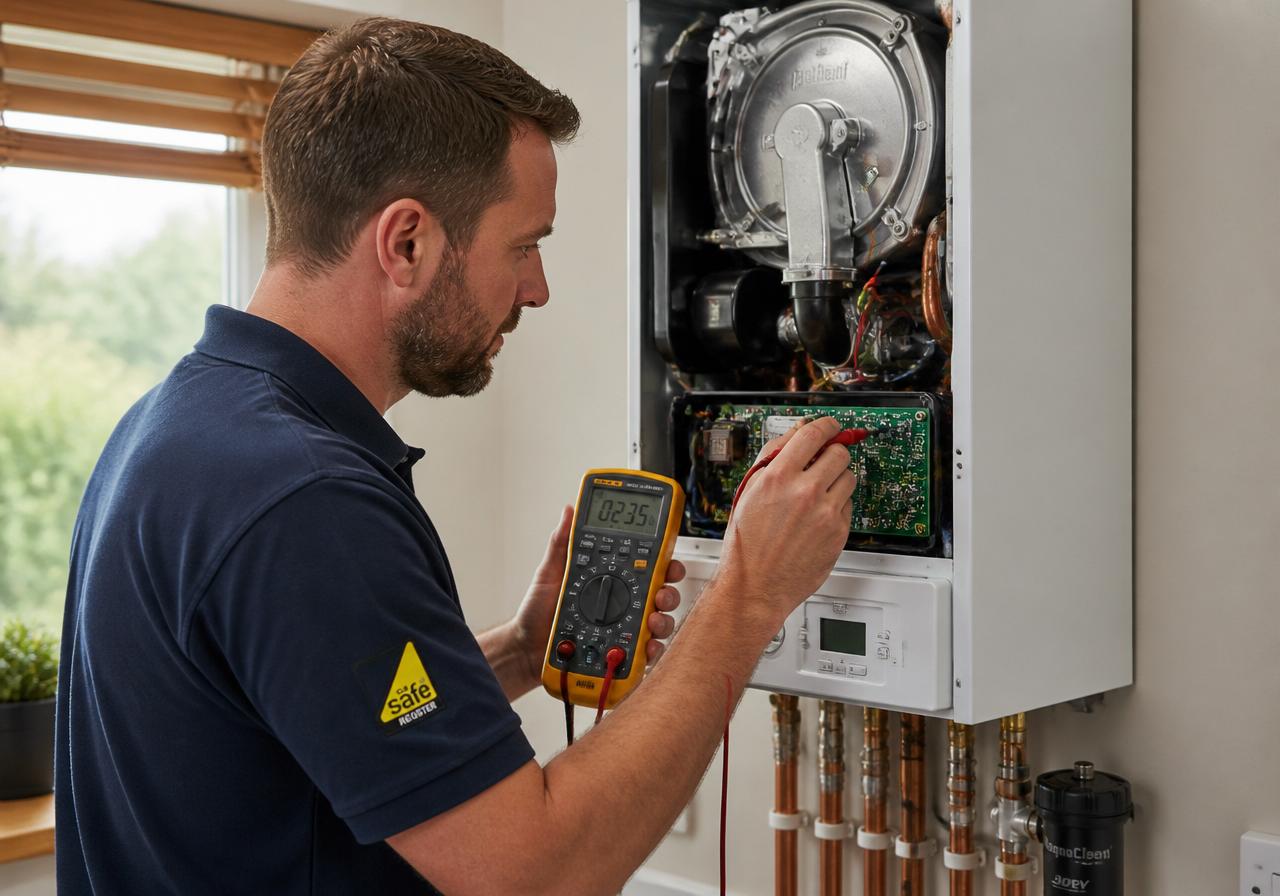
As Brogas, a Gas Safe registered plumbing and heating business covering Wigan and surrounding towns, we systematically diagnose high-pressure faults. We methodically check each potential cause, using specialised tools to test components like expansion vessels. You're left with a clear explanation of the confirmed fault and the necessary repair.

In summary

High boiler pressure requires investigation to prevent further issues. We diagnose the common causes in order of frequency: faulty filling loops, failed expansion vessels, and less often, PRV or plate heat exchanger issues. We serve Leigh and the wider Wigan borough.

Request a Leigh quote

Free · No obligation

Get Your Free Quote

We'll respond the same working day.

We reply to every enquiry within one working day.