
Next-day callout slots available for Wigan & surrounding areas

The Common Case: Low Pressure and Flow Restrictions

Often, kettling is a symptom of water overheating locally inside the boiler's heat exchanger. This happens when water isn't flowing through it efficiently. A common culprit in many homes, especially older properties around Pemberton with established heating systems, can be system pressure. Check your boiler's pressure gauge – it should typically be around 1-1.5 bar when cold. If it’s significantly lower, topping it up might alleviate the issue, at least temporarily. Also, consider if any radiators are cold or if you've recently bled them, as this can affect overall system flow.

  • Check your boiler's pressure gauge – it should be 1-1.5 bar (cold).
  • Locate your boiler's filling loop and top up pressure if low.
  • Verify all radiator valves are fully open, not partially closed.

The Awkward Case: Thermostat and System Settings

While less common for direct kettling, incorrect system settings can contribute to the problem. If your heating thermostat is set excessively high, the boiler might be working harder than necessary, leading to localised overheating. Check your room thermostat and boiler thermostat settings. Ensure your programmer isn't set to 'always on' if you only need heating at certain times. Sometimes, a system that hasn't been used for a while, perhaps after a long summer, can develop minor flow issues that manifest as kettling on initial firing up. These are easy, safe checks.

  • Verify your room thermostat isn't set too high.
  • Check your boiler's temperature dial – is it appropriate for the season?
  • Confirm your heating programmer is set correctly, not permanently on.

When to Stop Checking and Call Brogas

If you've performed the above checks and the kettling persists, or if the noise is loud, sudden, or accompanied by other issues like leaks, smells, or complete boiler shutdown, it’s time to stop your investigation. Kettling often points to internal scaling or sludge, which can severely shorten the life of your boiler's most expensive components. Attempting any internal checks is dangerous and requires a Gas Safe registered engineer. For any issues beyond pressure and thermostat adjustments, call Brogas on 07752 200878. We are Gas Safe registered and cover Wigan and surrounding areas.

  • Do not open your boiler's casing.
  • Never attempt to modify or bypass any boiler component.
  • If in doubt, switch off your boiler at the isolation switch.

Typical boiler kettling or banging — safe first checks before you call work in Pemberton

For Pemberton householders and landlords dealing with safe first checks before you call. Local housing stock — dense terraced streets around Ormskirk Road and 1950s semis toward Norley Hall — shapes how this work is carried out.

  • You've checked the pressure and it's normal.
  • You've adjusted thermostats and the noise continues.
  • The noise is getting worse or louder.
  • You notice other unusual sounds or smells from the boiler.
  • The boiler is losing pressure repeatedly after topping up.

Why locals choose Brogas here

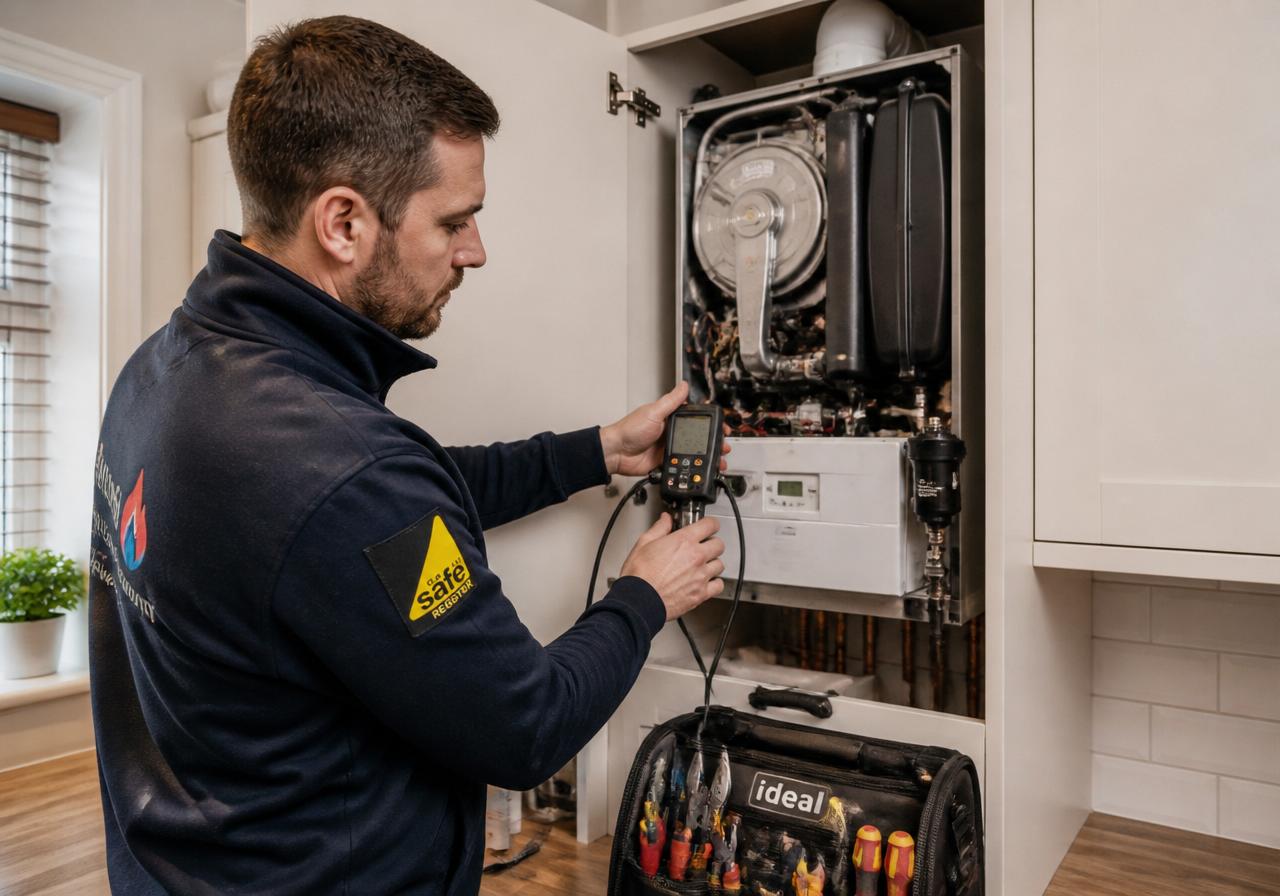
As Gas Safe registered engineers, we diagnose boiler issues accurately. We use calibrated tools to verify flow rates and temperatures, identifying whether scale, sludge, or circulation problems are causing kettling. You are left with a clear understanding of the fault and a durable solution.

Pemberton FAQs — boiler kettling or banging — safe first checks before you call

Is boiler kettling dangerous?+

While often a symptom of wear, kettling itself isn't usually an immediate danger in terms of gas leaks. However, it indicates your boiler is under stress due to overheating. Ignoring it will shorten the life of your appliance and could lead to a breakdown. It's a clear warning sign that needs professional attention to prevent more serious issues down the line.

Can I fix boiler kettling myself?+

For the vast majority of causes, no. The safe checks outlined above are about confirming basic operational parameters. True fixes for kettling, such as descaling the heat exchanger, removing magnetite sludge, or adjusting pump speeds, require specialist tools, chemicals, and Gas Safe registration. It is illegal and unsafe for an unqualified person to open the boiler casing.

Does kettling only affect old boilers?+

No, kettling can affect boilers of all ages, though it's often more pronounced or frequent in older systems, especially in areas like Pemberton with hard water. Limescale build-up is more common in hard water areas, and sludge can accumulate in any system over time if not properly maintained with inhibitors and filters. Newer boilers can kettle if flow is restricted.

What is the next step after my safe checks?+

If your safe checks haven't resolved or explained the kettling noise, the next step is to contact Brogas. We will conduct a thorough diagnostic process, checking flow rates, differential temperatures, and performing internal inspections to pinpoint the exact cause. From there, we can recommend the appropriate solution, whether it's a chemical clean, power flush, or descaling.

In summary

Boiler kettling indicates internal overheating, often from scale or sludge. Perform safe checks like pressure and thermostat settings. If it persists, call Brogas; internal issues require a Gas Safe engineer for diagnosis and repair.