
Next-day callout slots available for Wigan & surrounding areas

Standish FAQs — boiler leaking water — preventing it coming back

How does a magnetic filter help prevent leaks?+

Magnetic filters capture ferrous debris (sludge) circulating in your heating system. This sludge is a major cause of blockages and corrosion, especially in components like the heat exchanger and pump. By removing it, the filter helps to prevent internal damage that could lead to leaks over time, preserving the boiler's integrity.

Is water treatment important for a new boiler?+

Absolutely. Even new boilers benefit significantly from proper water treatment. Inhibitors protect against corrosion, and scale reducers prevent limescale build-up, especially in hard water areas. Manufacturer warranties often stipulate that the system must be adequately treated, so it's not just good practice but often a requirement.

Can I check my boiler pressure myself?+

Yes, you can. Your boiler will have a pressure gauge, usually with a green zone indicating the optimal operating range. If the pressure consistently drops or rises excessively, it could indicate an issue needing professional attention. Always consult your boiler's manual for specific instructions and recommended pressure levels.

How often should my boiler be serviced to prevent leaks?+

We recommend an annual service for all domestic boilers. This allows a Gas Safe engineer to inspect key components, identify potential issues before they become critical, and carry out necessary adjustments or cleaning. Regular servicing is a key preventative measure against unexpected breakdowns and leaks.

Typical boiler leaking water — preventing it coming back work in Standish

For Standish householders and landlords dealing with preventing it coming back. Local housing stock — 1930s bay-fronted semis on Rectory Lane and newer estates off Almond Brook Road — shapes how this work is carried out.

  • Ensuring annual boiler servicing is up to date.
  • Installing a suitable magnetic filter for your system.
  • Checking and maintaining the correct system pressure.
  • Considering a chemical inhibitor top-up with service.
  • Understanding your boiler's expansion vessel requirements.

Understanding the Initial Diagnosis: What Caused the Leak?

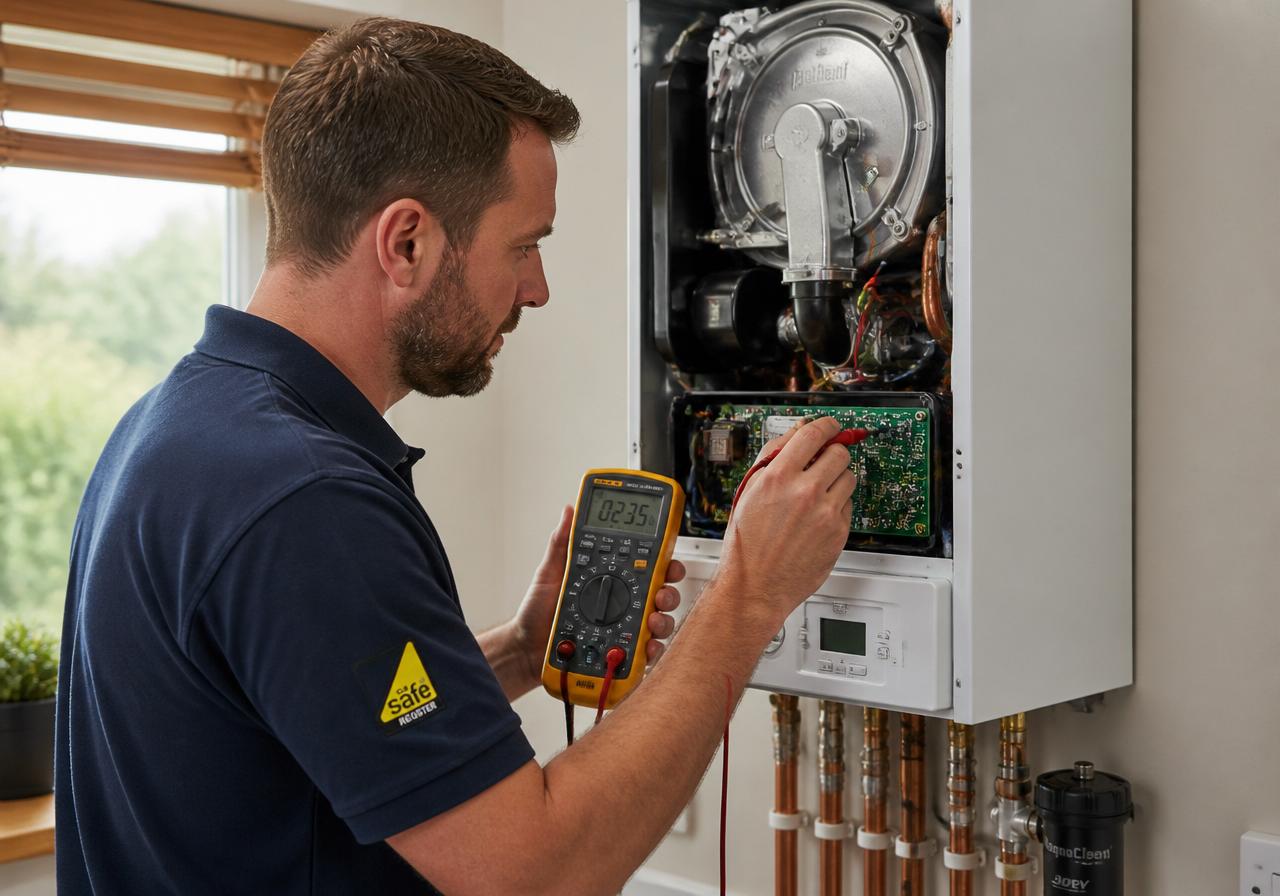
Before we talk about prevention, we need to precisely identify the initial leak's source. Is it system water, condensate, or mains water? This distinction is critical because each points to a completely different set of causes and, therefore, preventative actions. A condensate leak, for example, is typically a minor issue like a cracked trap. Conversely, a corroded heat exchanger, often leaking system water, is a serious matter that usually points towards a boiler replacement being the most sensible solution. We use various diagnostic tools, including pressure tests and visual inspections, to pinpoint the origin accurately.

  • System water often indicates a serious issue.
  • Condensate leaks are generally less critical.
  • Mains water leaks point to different component failures.

Cost Drivers: Why Some Leaks Are More Involved Than Others

The cost of resolving a boiler leak varies dramatically based on its origin and severity. Replacing a cracked condensate trap is a relatively straightforward job, involving minimal parts and labour. However, addressing a corroded heat exchanger is a substantial undertaking, often requiring a new boiler, which represents a significant investment. Failures of components like the pump head gasket or auto air vent fall somewhere in between. Our assessment will clearly explain the identified fault, the necessary repair, and the implications for your system's longevity, allowing you to make an informed decision.

  • Heat exchanger issues are the most expensive.
  • Condensate trap repairs are usually minor.
  • Component failures vary in cost and complexity.

Preventing a Recurrence: Maintenance and System Changes

Once the immediate leak is fixed, our focus shifts to preventing it from happening again. This involves annual servicing, where we check for early signs of wear and tear, and ensuring adequate water treatment. For older systems, especially in 1930s bay-fronted semis common in Standish, this might mean installing a magnetic filter or an inline scale reducer. System water quality is paramount; sludge and limescale are major contributors to heat exchanger corrosion and pump failures. Sometimes, adjusting system pressure or checking expansion vessel charge can prevent over-pressurisation leading to PRV discharge. We will advise on the most effective long-term strategies for your specific boiler and property.

  • Annual servicing is crucial for early detection.
  • Water treatment prevents sludge and limescale build-up.
  • Magnetic filters protect vital boiler components.
  • Correct system pressure prevents PRV discharge.
  • Expansion vessel checks maintain system stability.

Nearby areas we also cover

Why locals choose Brogas here

Brogas is a Gas Safe registered plumbing and heating business. We meticulously diagnose boiler faults, explaining findings clearly. You receive a professional assessment and transparent advice for lasting solutions.

In summary

Preventing boiler leaks requires understanding the cause and implementing proper maintenance. Brogas offers expert diagnosis and solutions, including water treatment and system upgrades, to keep your Standish home's heating reliable.

Request a Standish quote

Free · No obligation

Get Your Free Quote

We'll respond the same working day.

We reply to every enquiry within one working day.