
Next-day callout slots available for Wigan & surrounding areas
Postcode
WN1
Council
Wigan Council
Nearest road
A49 & A577
From Wigan
town centre

Why locals choose Brogas here

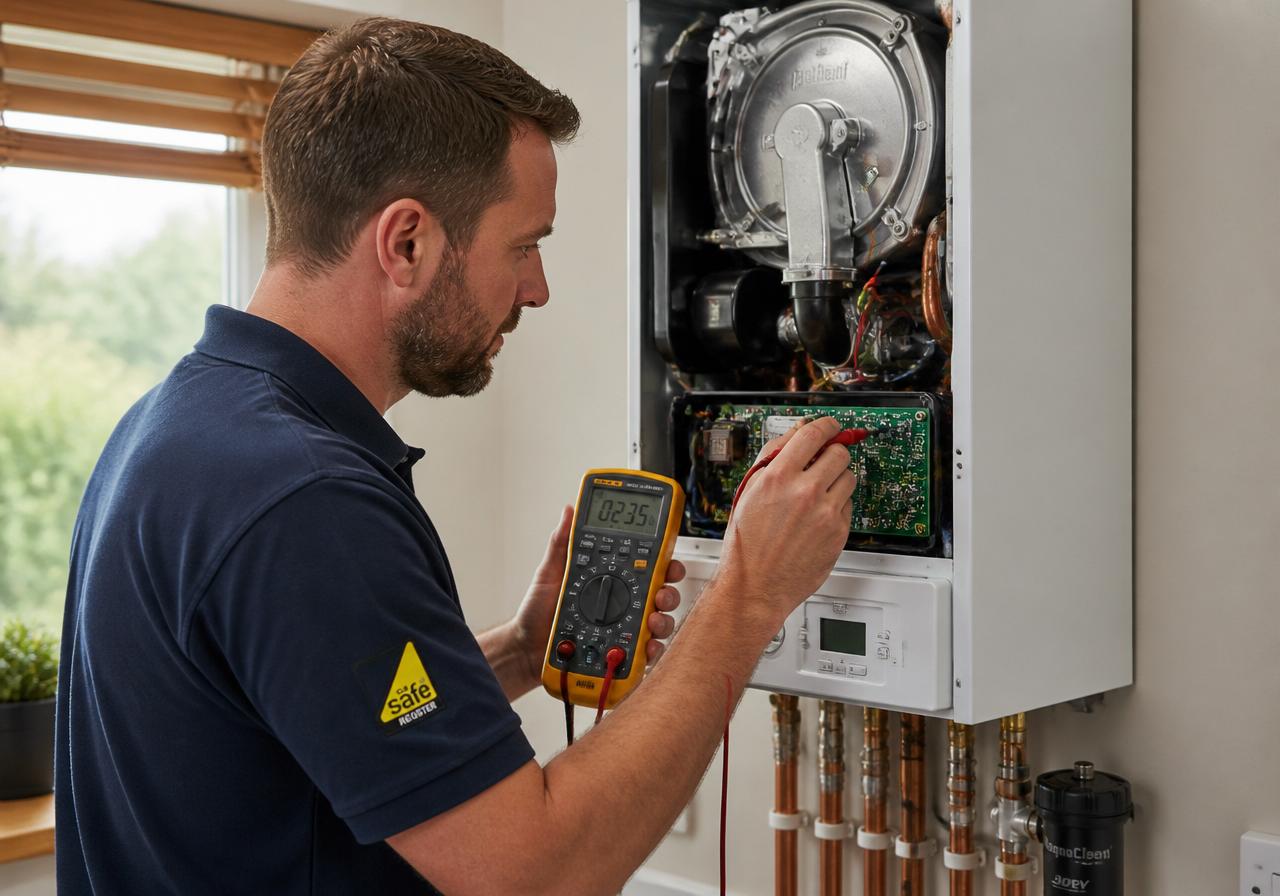
We conduct thorough diagnostics, explaining each step. You receive a clear explanation of the fault, the required parts, and the labour involved. Our Gas Safe registration confirms our competence and adherence to safety standards, leaving you with a safe, functioning heating system.

Typical boiler leaking water — parts, labour and what drives the cost work in Wigan

For Wigan householders and landlords dealing with parts, labour and what drives the cost. Local housing stock — Victorian terraces round Whelley, 1930s semis toward Beech Hill and modern apartments near Wallgate quarter — shapes how this work is carried out.

  • Understanding why certain leak repairs are more complex
  • Seeing which parts drive the cost of a specific repair
  • Recognising the labour involved for different leak types
  • Differentiating minor fixes from major component replacements
  • Preparing for a potential boiler replacement conversation

Identifying the Leak Source: System, Condensate, or Mains

Before any repair can commence, we need to definitively identify the type of water leaking. System water is typically dirty or discoloured, often under pressure. Condensate is clear, often cold, and usually drips from a pipe on the boiler's underside, especially during operation. Mains water, which is also clear, usually indicates a leak on the incoming cold feed to the boiler. Each type points to a different internal component, directly influencing the parts needed and the complexity of the repair. This diagnostic step is crucial and dictates the subsequent labour involved.

  • System water: often discoloured, hot, under pressure
  • Condensate: clear, cool, drips during boiler use
  • Mains water: clear, cold, from incoming supply

Common Parts & Labour for Leak Repairs

The 'cost' of a boiler leak repair is largely determined by the part that's failed and the labour involved in accessing and replacing it. A minor leak from a loose compression joint on the boiler tails, for example, might only require tightening or a new washer, taking minimal time. A failed pump head gasket or auto air vent requires sourcing the specific part for your boiler model, draining the system, replacing the component, and then refilling and repressurising. This involves more time on-site and the cost of the specific manufacturer part.

  • Compression joint: washer, minor labour
  • Pressure relief valve: new valve, system drain/refill
  • Pump head gasket/air vent: specific part, system drain/refill
  • Condensate trap: replacement part, minimal labour

The Expensive One: Corroded Heat Exchanger

A corroded heat exchanger is typically the most serious and expensive leak. This component is central to the boiler's operation, transferring heat to your system water. Corrosion usually means the internal waterways have breached, leading to system water leaking internally or externally. Replacement involves significant labour, often requiring the boiler to be partially dismantled. The part itself is substantial. For properties in areas like the Victorian terraces around Whelley, older boilers might reach this point of failure, often prompting a conversation about the viability of a full boiler replacement versus a costly repair.

  • Heat exchanger: major part cost, extensive labour
  • Boiler partially dismantled for access
  • System drained, flushed, refilled, recommissioned
  • Often leads to boiler replacement discussion

Wigan FAQs — boiler leaking water — parts, labour and what drives the cost

Why is identifying the water type so important for pricing?+

The type of water (system, condensate, or mains) immediately narrows down the potential faulty components. This allows us to accurately quote for the correct parts and estimate the labour needed. For example, a condensate leak is usually simple, while a system water leak could indicate a major internal failure, dramatically affecting the repair's complexity and cost.

What if the leak is from a compression joint?+

Leaks from compression joints are generally the least complex. Often, they just require tightening or a new olive/washer. The labour involved is minimal, and the part cost is negligible. However, if left, even a small drip can cause corrosion to other components, potentially increasing future repair costs. We always address even minor leaks promptly.

How much does a pressure relief valve replacement involve?+

A pressure relief valve (PRV) discharging means the system pressure is too high, or the valve itself has failed. Replacing it involves isolating the boiler, draining down the central heating system, replacing the valve (which is a specific manufacturer part), then refilling and repressurising the system. This takes more labour than a simple joint but less than major internal components.

What determines the cost difference for a heat exchanger leak?+

The heat exchanger is one of the most expensive parts in a boiler. Its replacement is highly labour-intensive, requiring extensive boiler dismantling and reassembly. The cost difference is driven by the significant part cost combined with the extended time needed for this complex repair, often making it economically unviable for older boilers, particularly in areas like Wigan's older housing stock.

In summary

Understanding the cost of a boiler leak repair in Wigan involves identifying the water type, the specific faulty part, and the associated labour. From minor joint fixes to major heat exchanger replacements, the complexity and expense vary significantly.

Get a Wigan quote

Free · No obligation

Get Your Free Quote

We'll respond the same working day.

We reply to every enquiry within one working day.