
Next-day callout slots available for Wigan & surrounding areas
Postcode
WN6
Council
Wigan Council
Nearest road
A49 / M6 J27
From Wigan
3.5 miles north

Why locals choose Brogas here

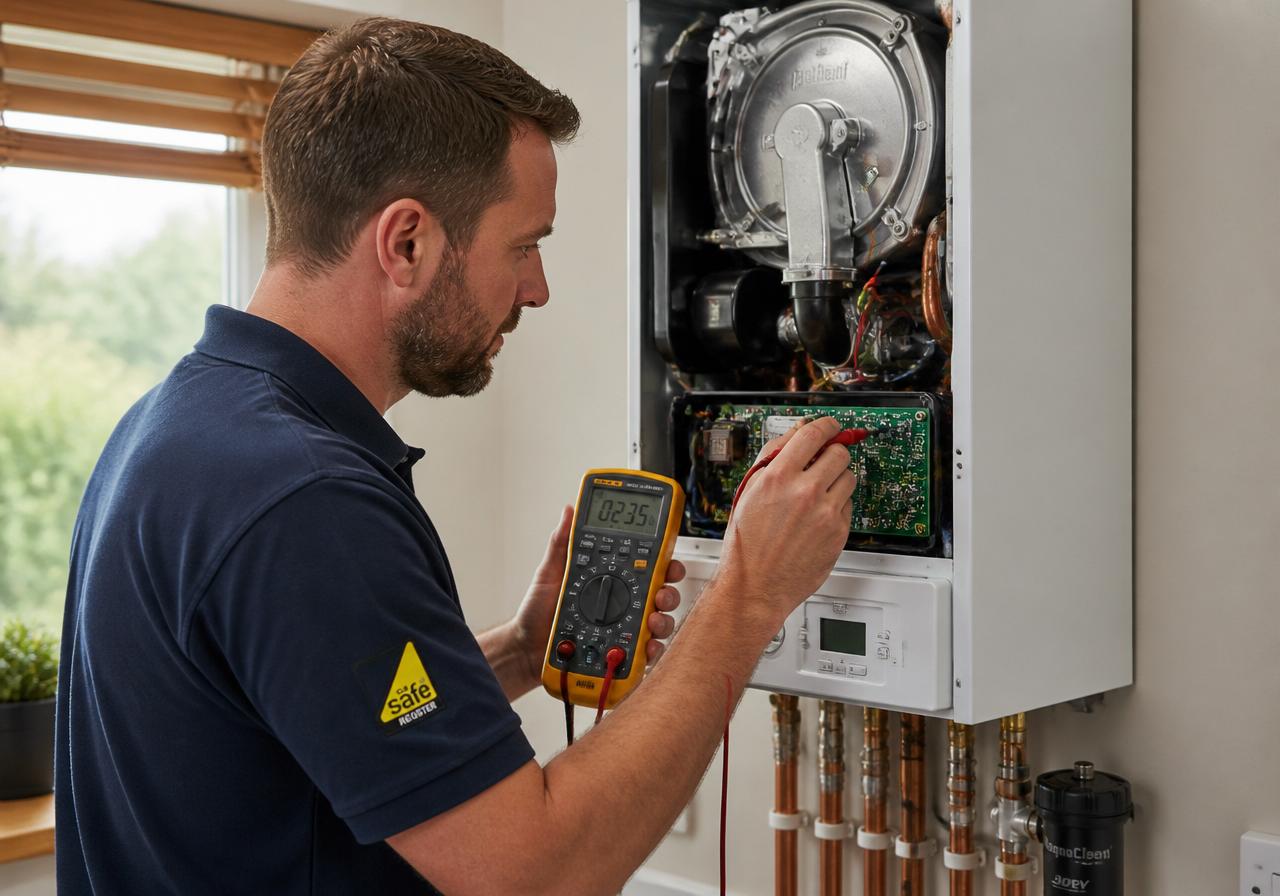
Brogas is a Gas Safe registered plumbing and heating business covering Wigan and surrounding towns. We meticulously follow a structured diagnostic process, ensuring all potential causes of high boiler pressure are investigated systematically. You'll be left with a clear explanation of the fault and the required solution.

Typical boiler pressure too high — the diagnostic sequence work in Standish

For Standish householders and landlords dealing with the diagnostic sequence. Local housing stock — 1930s bay-fronted semis on Rectory Lane and newer estates off Almond Brook Road — shapes how this work is carried out.

  • Boiler pressure gauge constantly in the red.
  • Water dripping from the outside overflow pipe.
  • Boiler locking out with a high pressure fault.
  • Pressure climbing after topping up the system.
  • Noticing pressure changes when using hot water.

Our Step-by-Step Diagnostic Process

When we arrive at your property, our initial focus is on confirming the high pressure and then systematically eliminating potential causes. This ordered approach is critical; jumping to conclusions can lead to unnecessary work or misdiagnosis. We start with the most common and easily verifiable issues, moving to more involved checks only when necessary. This ensures we identify the problem accurately and with minimal disruption, getting your boiler functioning correctly again.

  • Check the filling loop connection.
  • Test the expansion vessel charge.
  • Inspect the pressure relief valve (PRV).
  • Assess for plate heat exchanger issues.

The Logic Behind Our Diagnostic Order

We always begin by checking the filling loop. Often, a filling loop left connected and slightly open is the simplest cause of over-pressurisation. Next, we test the expansion vessel's charge when the system is cold. A failed vessel is a common culprit, unable to absorb system expansion. Only after these primary checks do we move to inspecting the pressure relief valve (PRV) for damage, as a faulty PRV can also allow water to escape. Finally, if these common issues are ruled out, we then investigate the more specific fault of a plate heat exchanger allowing mains water into the sealed system. This sequence prevents unnecessary deep dives.

  • Start with the most accessible and common causes.
  • Eliminate external factors first (filling loop).
  • Verify core system components (expansion vessel).
  • Inspect safety mechanisms (PRV).
  • Diagnose internal component failure last (plate exchanger).

When the Sequence Reveals a Specific Fault

Each step in our diagnostic sequence is designed to either confirm or eliminate a potential cause. If we find the filling loop is slightly open, that's often the entire problem. If the expansion vessel has lost its charge, re-charging or replacing it is the solution. A visibly damaged PRV indicates its failure. The plate heat exchanger fault, while less common, has distinct indicators we look for, such as the system pressure rising when a hot tap is opened without the boiler firing. This methodical process ensures we don't overlook a simpler solution or jump to a more complex repair prematurely in homes across areas like Standish.

  • A passing filling loop is a straightforward fix.
  • Expansion vessel charge loss requires a repressurise or replacement.
  • PRV damage necessitates replacement.
  • Plate heat exchanger issues lead to specific repairs.

Standish FAQs — boiler pressure too high — the diagnostic sequence

Can I check the filling loop myself?+

Yes, you can visually check that your external filling loop is disconnected. If it's an internal, integrated loop, ensure the isolation valves are fully closed. Sometimes, even when closed, an old valve seat can pass water, so a professional check is still advisable if pressure persists.

How long does the diagnostic process take?+

The time taken varies depending on the specific fault and how quickly it's identified. Simple issues like a passing filling loop can be diagnosed quickly. More complex issues involving internal components might take longer, but our methodical approach aims for efficiency and accuracy.

Why is a failed expansion vessel a common issue?+

The expansion vessel contains a diaphragm and air charge designed to absorb the natural expansion of water as it heats up. Over time, the air charge can deplete, or the diaphragm can fail, meaning the vessel can no longer perform its function, leading to pressure spikes.

What if the diagnostic points to the plate heat exchanger?+

If our diagnostic sequence points to a faulty plate heat exchanger, it means your boiler is allowing mains water into the sealed heating system. This component would need to be replaced. We would confirm this specific fault with identifiable checks before proceeding.

In summary

Our methodical diagnostic sequence for high boiler pressure systematically checks the filling loop, expansion vessel, PRV, and plate heat exchanger. This ensures accurate identification of the root cause.

Get a Standish quote

Free · No obligation

Get Your Free Quote

We'll respond the same working day.

We reply to every enquiry within one working day.