
Next-day callout slots available for Wigan & surrounding areas

Westhoughton FAQs — boiler pressure too high — what happens on the visit

Why does my boiler keep locking out on high pressure?+

Boilers often have safety mechanisms that cause them to lock out if the pressure exceeds a certain limit. This is usually to prevent damage to components or the system as a whole. It indicates that the underlying issue causing the high pressure needs to be addressed rather than simply resetting the boiler.

Can a high pressure boiler cause a leak?+

Yes, absolutely. Sustained high pressure can overstress components, leading to leaks from joints, pipes, or even internal boiler parts. The pressure relief valve is designed to discharge excess pressure, and if it's continually active, it suggests a problem that could eventually manifest as a leak elsewhere.

Is it normal for the pressure to drop after fixing high pressure?+

After addressing the root cause of high pressure, it is normal for the pressure to settle to its correct operating level. We ensure the system is at the manufacturer's recommended cold fill pressure before leaving, and it should remain stable unless another fault develops.

How often should an expansion vessel be checked?+

While a full service includes checking the expansion vessel, it doesn't always involve a full re-pressurisation test. If you're experiencing intermittent high pressure, or if your system is particularly old (common in some Westhoughton properties), it's worth having the vessel's charge checked more frequently.

Typical boiler pressure too high — what happens on the visit work in Westhoughton

For Westhoughton householders and landlords dealing with what happens on the visit. Local housing stock — 1990s–2000s developer estates alongside older terraces around Market Street — shapes how this work is carried out.

  • Your boiler pressure gauge is consistently above 2 bar.
  • Water is dripping from an external pipe near your boiler.
  • Your boiler frequently locks out with a high-pressure fault code.
  • You recently topped up your boiler and now pressure is too high.
  • You suspect your filling loop might be leaking.

On-Site Diagnostics: The Short Answer

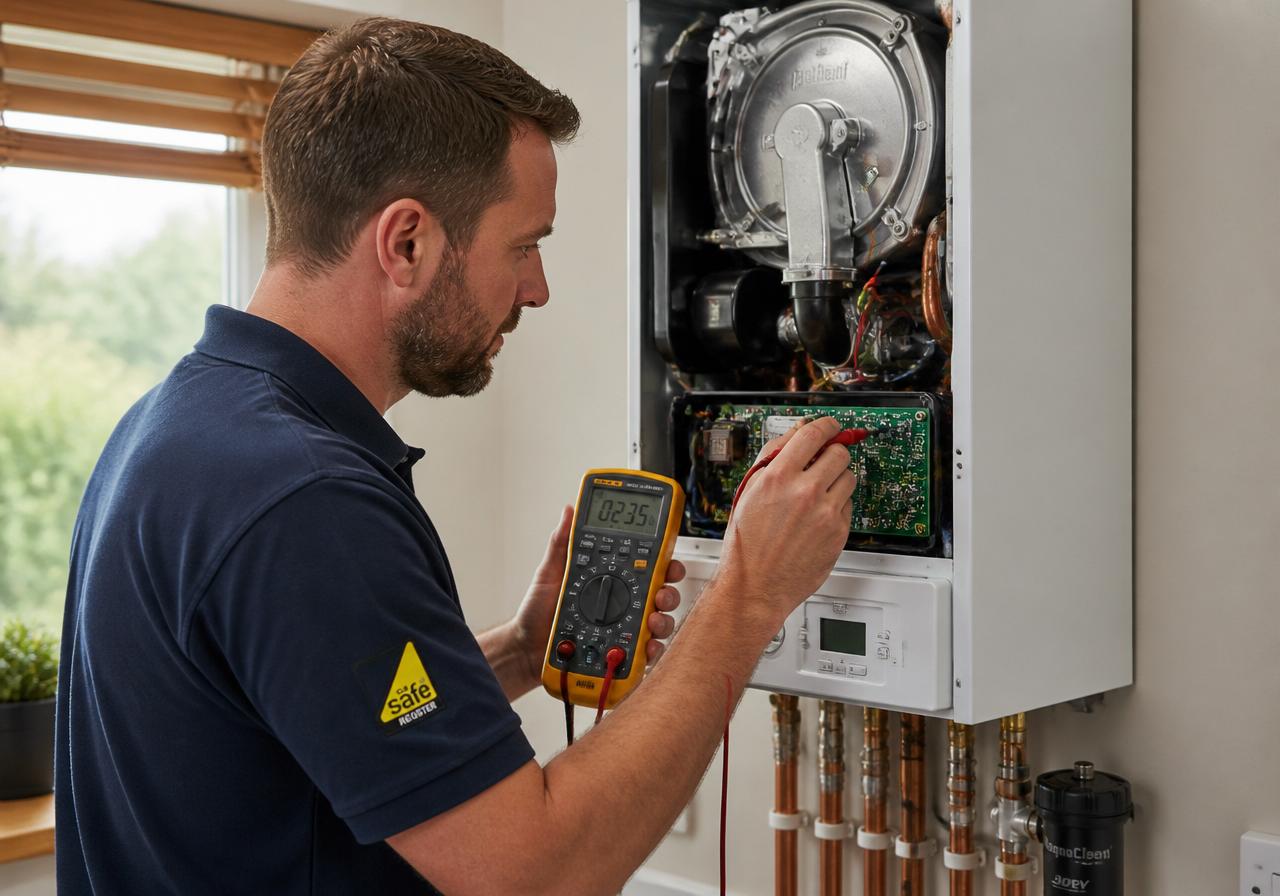
When we arrive, the first thing is to safely isolate the boiler and assess the immediate situation. We're looking for signs like active discharge from the pressure relief valve (PRV). We then systematically work through the common culprits. This isn't guesswork; it's a methodical process based on established fault patterns. Our goal is to pinpoint the specific component causing the issue and advise on the necessary repair, ensuring the system operates safely and correctly.

  • Visual check of the PRV discharge
  • Examination of the boiler pressure gauge
  • Tracing potential external water ingress

The Detail: What We Actually Test and Why

The diagnostic process begins with the filling loop. We'll check if it’s correctly isolated and, crucially, if it's passing water into your system even when closed. Next, we test the expansion vessel. This involves connecting a pressure gauge to the vessel's Schraeder valve (like a car tyre valve) while the system is cold and depressurised. If the charge is low or absent, the vessel can't absorb system expansion, leading to high pressure. Finally, we inspect the PRV itself for damage to its seat, which can cause a constant drip or discharge. For more complex cases, especially in 1990s-2000s developer homes common in Westhoughton, we may suspect the plate heat exchanger. We confirm this by temporarily isolating the mains cold feed to the boiler and observing if system pressure drops, indicating mains water crossing into the heating circuit.

  • Filling loop integrity test
  • Expansion vessel charge pressure test (cold)
  • PRV seat and operation inspection
  • Plate heat exchanger isolation test

Specific Faults and What We Leave You With

Once the fault is identified, you'll receive a clear explanation of what's wrong. If it's a simple fix, like an incorrectly closed filling loop, we'll rectify it on the spot. For component failures, such as a failed expansion vessel or a passing PRV, we will discuss the repair options. If the plate heat exchanger is the culprit, we'll explain the implications of mains water contamination and the necessary replacement. You'll be left with a clear understanding of the diagnosis and the recommended course of action to restore your boiler to safe, correct operating pressure.

  • Clear diagnosis of the fault
  • Explanation of repair options
  • Rectification of simple issues on-site
  • Advice on boiler safety and operation

Nearby areas we also cover

Why locals choose Brogas here

As a Gas Safe registered business, Brogas conducts thorough, methodical diagnostics. We don't guess; we test. You receive a precise fault identification and a clear explanation of what's needed. We ensure your boiler is left in a safe operating condition.

In summary

High boiler pressure requires expert diagnosis. We methodically test filling loops, expansion vessels, and PRVs to identify and resolve the root cause.

Request a Westhoughton quote

Free · No obligation

Get Your Free Quote

We'll respond the same working day.

We reply to every enquiry within one working day.