
Next-day callout slots available for Wigan & surrounding areas
Postcode
WN4
Council
Wigan Council
Nearest road
A49 Warrington Road
From Wigan
4 miles south

Why locals choose Brogas here

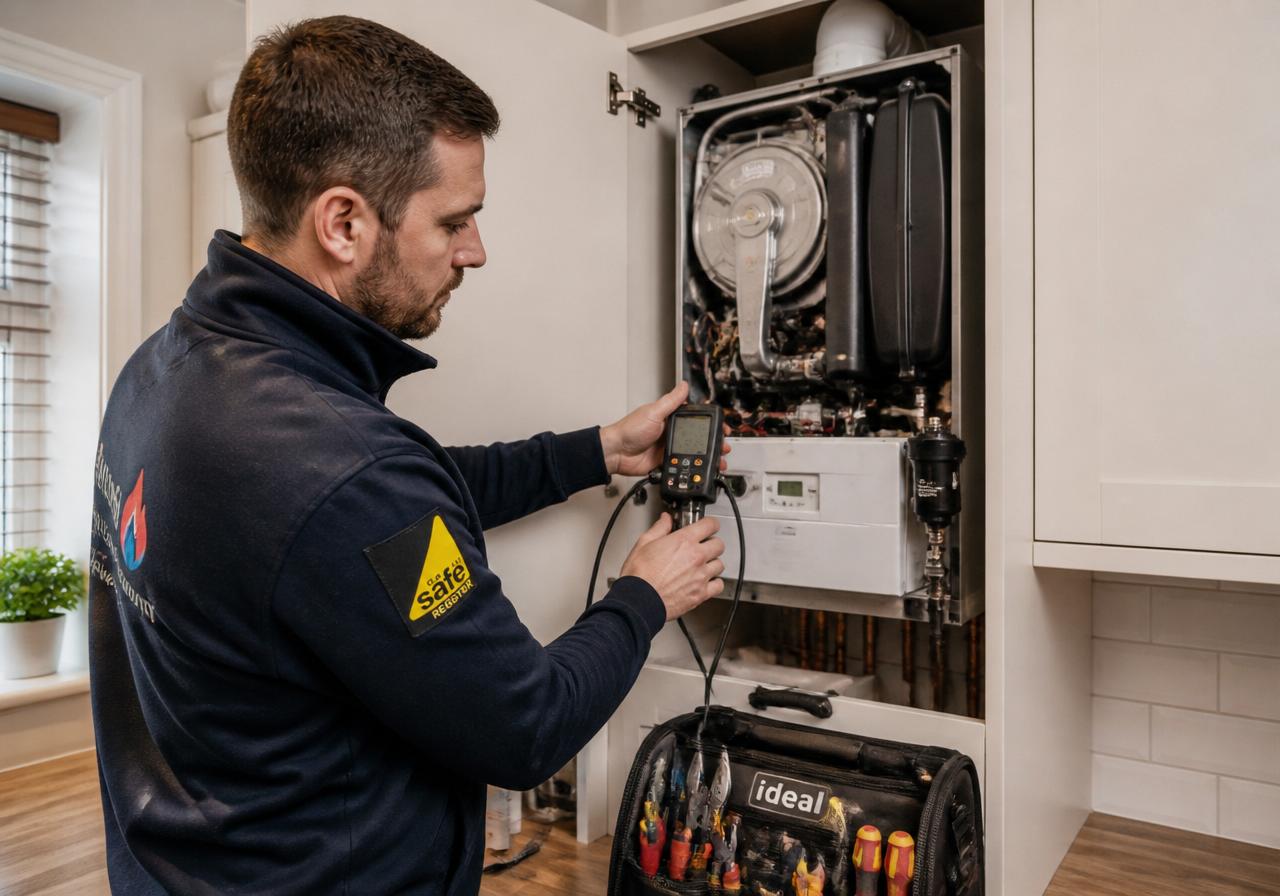
Brogas is a Gas Safe registered plumbing and heating business covering Wigan and the surrounding towns. We conduct thorough diagnostics to ensure accurate identification of the problem, leading to effective, long-term solutions for your heating system, confirmed by our detailed reporting.

Typical radiators cold at the bottom — the diagnostic sequence work in Ashton-in-Makerfield

For Ashton-in-Makerfield householders and landlords dealing with the diagnostic sequence. Local housing stock — Edwardian terraces along Warrington Road and generous 1950s semis toward Bryn — shapes how this work is carried out.

  • Warm at the top, cold at the bottom
  • Radiators need frequent bleeding but still go cold
  • Boiler making unusual noises or struggling
  • Heating system takes a long time to warm up
  • Dirty, discoloured water when bleeding radiators

The Diagnostic Sequence: Our Ordered Checks

When we get a call about radiators being cold at the bottom, we follow a precise sequence of diagnostics. This isn't just guesswork; it's designed to efficiently pinpoint the root cause without unnecessary steps. We start by confirming the symptom: ensuring it's not simply trapped air, which would manifest as cold at the top and warm at the bottom, easily fixed with bleeding. This initial confirmation sets the direction for our further investigations.

  • Visual inspection for obvious issues
  • Confirming warm top, cold bottom symptom
  • Checking for localised air lock vs. system-wide issue

Identifying Systemic Issues: The Deeper Dive

If bleeding doesn't resolve it, or if multiple radiators are affected, we then shift our focus to the system's core health. This involves checking the system's inhibitor levels – often, this is done by a simple test kit. An exhausted or absent inhibitor is a primary driver of internal corrosion and magnetite sludge. We also assess the age and material of your radiators, as older steel radiators, common in properties near Haydock Park racecourse, are particularly prone to internal corrosion. Pump speed is also checked, as it needs to be sufficient to keep debris suspended.

  • Testing inhibitor levels in the system water
  • Assessing radiator age and material type
  • Verifying adequate pump speed settings

Final Diagnosis and Recommendations

The culmination of our diagnostic sequence leads to a clear understanding of the problem. If it's isolated to one radiator, we may recommend dropping it off for an individual flush. However, if multiple radiators are affected, or if inhibitor levels are low and corrosion is evident, the honest recommendation will be for a chemical clean or a power flush of the entire system, followed by the addition of fresh inhibitor and the installation of a magnetic filter on the return pipework. This combination addresses the current issue and prevents future build-up.

  • Individual radiator flush for isolated issues
  • Chemical clean or power flush for systemic problems
  • Installation of a magnetic filter on the return

Ashton-in-Makerfield FAQs — radiators cold at the bottom — the diagnostic sequence

Why is my radiator cold at the bottom, but warm at the top?+

This specific symptom indicates that heavy, dense magnetite sludge, a by-product of internal system corrosion, has settled at the bottom of the radiator. Unlike trapped air, which makes the top cold, sludge prevents the hot water from circulating effectively through the lower section, meaning bleeding will not resolve it.

What is magnetite sludge, and why is it a problem?+

Magnetite sludge is a black, metallic iron oxide that forms when steel components in your heating system corrode. It’s a problem because it restricts water flow, reduces heating efficiency, causes cold spots in radiators, and can eventually block pipes or damage your boiler's heat exchanger and pump.

Can I fix this myself with bleeding?+

No, bleeding your radiators will not fix this specific issue. Bleeding removes trapped air, which causes radiators to be cold at the top. If your radiator is cold at the bottom and warm at the top, it's due to settled sludge, which requires different, more intensive methods to remove, such as a chemical clean or power flush.

How long does a power flush take for properties like those in Ashton-in-Makerfield?+

The duration of a power flush depends on the size of your property and the severity of the sludge build-up. For a typical three-bedroom semi, common in Ashton-in-Makerfield, it usually takes a full day. We always provide a clear estimate after our initial diagnostic assessment.

In summary

Radiators cold at the bottom signals magnetite sludge from corrosion. Our Gas Safe engineers use a precise diagnostic sequence to identify the cause, offering solutions from individual radiator flushing to full system power flushes and inhibitor treatment.

Get a Ashton-in-Makerfield quote

Free · No obligation

Get Your Free Quote

We'll respond the same working day.

We reply to every enquiry within one working day.