
Next-day callout slots available for Wigan & surrounding areas
Postcode
WN5
Council
Wigan Council
Nearest road
A577 Ormskirk Road
From Wigan
2 miles west

Why locals choose Brogas here

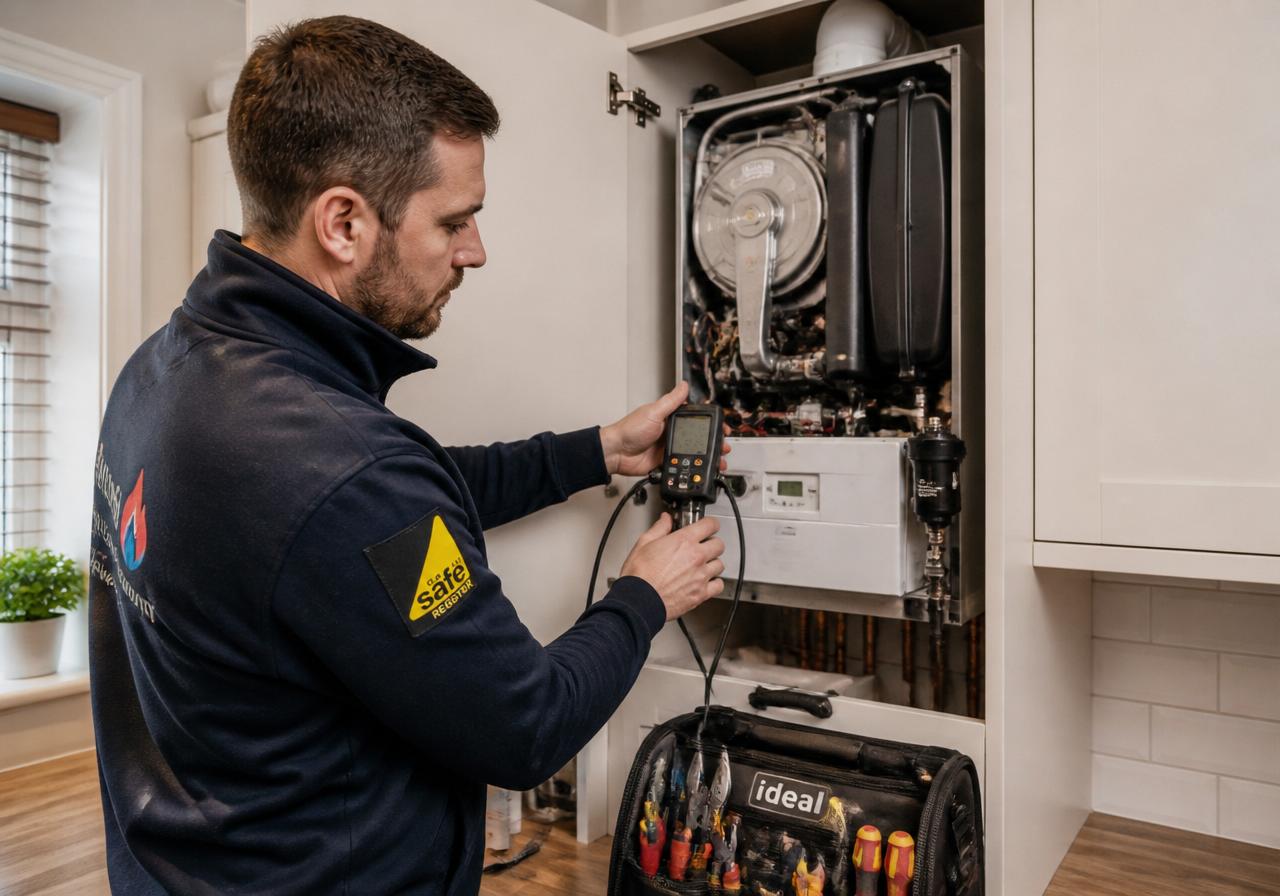
As a Gas Safe registered plumbing and heating business covering Wigan and surrounding towns, we work systematically. We diagnose accurately, explain options clearly, and ensure your heating system functions efficiently and safely, leaving you with a well-performing system.

Typical radiators cold at the bottom — parts, labour and what drives the cost work in Pemberton

For Pemberton householders and landlords dealing with parts, labour and what drives the cost. Local housing stock — dense terraced streets around Ormskirk Road and 1950s semis toward Norley Hall — shapes how this work is carried out.

  • Multiple radiators cold at the bottom
  • Recently flushed system without inhibitor
  • Boiler making unusual noises or struggling
  • Wanting to protect a new boiler investment
  • Existing system without a magnetic filter

Identifying the Issue and Initial Diagnostics

As a Gas Safe registered engineer, my first step is always to diagnose the extent of the problem. If it's just one radiator affected, we'll confirm it's not a valve issue. If several radiators are exhibiting the same cold bottom symptom, it strongly suggests a system-wide sludge build-up. This involves checking the system pressure, the flow and return temperatures, and often visually inspecting the inside of a radiator if feasible. We're looking for evidence of magnetite, which is a black, sludgy material. This initial assessment guides the subsequent repair approach and therefore the associated time and parts.

  • Assess extent of cold radiators
  • Check system pressure and temperatures
  • Inspect for magnetite presence
  • Rule out isolated valve issues

Key Factors Driving Repair Costs

The primary drivers for cost here are the time involved and the specific parts required. For a single radiator, we might be able to drop it off the wall and manually flush it with a hose, which takes less time. However, if multiple radiators are affected, a full system chemical clean or power flush becomes necessary. This is a more involved process, requiring specialized equipment and significantly more labour. Installation of a magnetic filter on the return pipe is also a crucial part to prevent future build-up, and while the filter itself is a part cost, its installation is relatively quick once the system is drained.

  • Number of affected radiators
  • Need for chemical clean/power flush
  • Installation of a magnetic filter
  • Labour time for system draining/refilling

Prevention: Inhibitor and Magnetic Filters

Once the system is clean, prevention is key to avoiding recurrence. This involves dosing the system with a good quality heating inhibitor. If your system has never had inhibitor, or it’s long since exhausted, this chemical protection is vital. For optimal ongoing protection, particularly in areas like Pemberton where mains water can be hard, a magnetic filter is highly recommended. This device collects circulating metallic debris, preventing it from settling in radiators or, more critically, damaging your boiler's heat exchanger. Regular servicing includes checking and topping up inhibitor levels, as well as cleaning the magnetic filter.

  • Dosing with quality heating inhibitor
  • Installation of a magnetic filter
  • Regular cleaning of the magnetic filter
  • Scheduled inhibitor top-ups

Pemberton FAQs — radiators cold at the bottom — parts, labour and what drives the cost

Why does bleeding not fix a radiator that's cold at the bottom?+

Bleeding a radiator only removes trapped air, which usually collects at the top. If the bottom is cold, it's typically due to heavy, solid sludge (magnetite) that has settled at the lowest point, blocking the water flow. Air isn't the problem here, so bleeding won't make a difference.

How long does a power flush take for an average house?+

The duration of a power flush varies significantly based on system size, condition, and the amount of sludge present. A typical domestic property might take a full day, but larger or heavily contaminated systems could require more time. We assess this on-site during our diagnostic visit.

Is a magnetic filter really necessary after a system clean?+

Absolutely. A chemical clean or power flush removes existing sludge, but corrosion is an ongoing process within your heating system. A magnetic filter continuously captures new metallic debris as it forms, preventing it from recirculating and settling in radiators or damaging the boiler. It's an excellent long-term protective measure.

Can I just replace the cold radiator instead of flushing the whole system?+

You can, but it might not solve the underlying problem. If sludge is a system-wide issue, replacing one radiator only means the new one will eventually succumb to the same build-up. It's often more cost-effective in the long run to address the root cause with a system clean and preventative measures.

In summary

Radiators cold at the bottom indicate sludge, not air. Repair costs depend on the extent of the issue – single radiator flush or full system power flush – and preventative measures like magnetic filter installation and inhibitor top-ups are crucial for long-term health.

Get a Pemberton quote

Free · No obligation

Get Your Free Quote

We'll respond the same working day.

We reply to every enquiry within one working day.