
Next-day callout slots available for Wigan & surrounding areas

Atherton FAQs — radiators cold at the bottom — root causes ranked by how often we see them

Can I fix this myself with bleeding?+

No. Bleeding removes trapped air. Cold at the bottom means solid material, typically magnetite sludge, is blocking the water flow. Bleeding won't remove this physical blockage, and you risk making the system messier.

What's the long-term solution for sludge?+

For widespread issues, a chemical clean or a power flush is typically required to remove the settled magnetite. Following this, fitting a magnetic filter on the return pipe and introducing fresh inhibitor will help prevent recurrence.

Do I need a new radiator if it's cold at the bottom?+

Not necessarily. A single affected radiator can often be isolated, dropped off, and individually flushed to remove the sludge. We'd always assess the whole system first to ensure it's not a wider problem.

How does a magnetic filter help?+

A magnetic filter captures magnetic particles, like magnetite sludge, as they circulate in the heating system's water. This prevents them from settling in radiators and other components, protecting your system long-term.

Typical radiators cold at the bottom — root causes ranked by how often we see them work in Atherton

For Atherton householders and landlords dealing with root causes ranked by how often we see them. Local housing stock — tightly packed Victorian terraces near Atherton town and 1990s estates toward Hag Fold — shapes how this work is carried out.

  • Multiple radiators cold at the bottom.
  • System water appears discoloured or sludgy.
  • Heating system is old and never been serviced.
  • No magnetic filter installed on the system.
  • Radiators heat slowly or unevenly.

What We See Most Often: Magnetite Sludge Accumulation

The single most frequent cause we encounter for radiators cold at the bottom is magnetite sludge. This is basically rust, a black, metallic-like dust that forms inside your radiators and pipes. Because it's heavier than water, it settles in the lowest parts of your radiators, blocking the flow of hot water. This isn't just a slight impediment; it can completely choke off the bottom section. This issue is particularly prevalent in older systems, especially if they've never had a good dose of inhibitor or if that inhibitor has long since been exhausted. No amount of bleeding will touch this problem, as it's not air; it's solid gunk.

  • Most common cause
  • Settles at radiator bottom
  • Blocks hot water flow

Confirming the Culprit: Our Diagnostic Process

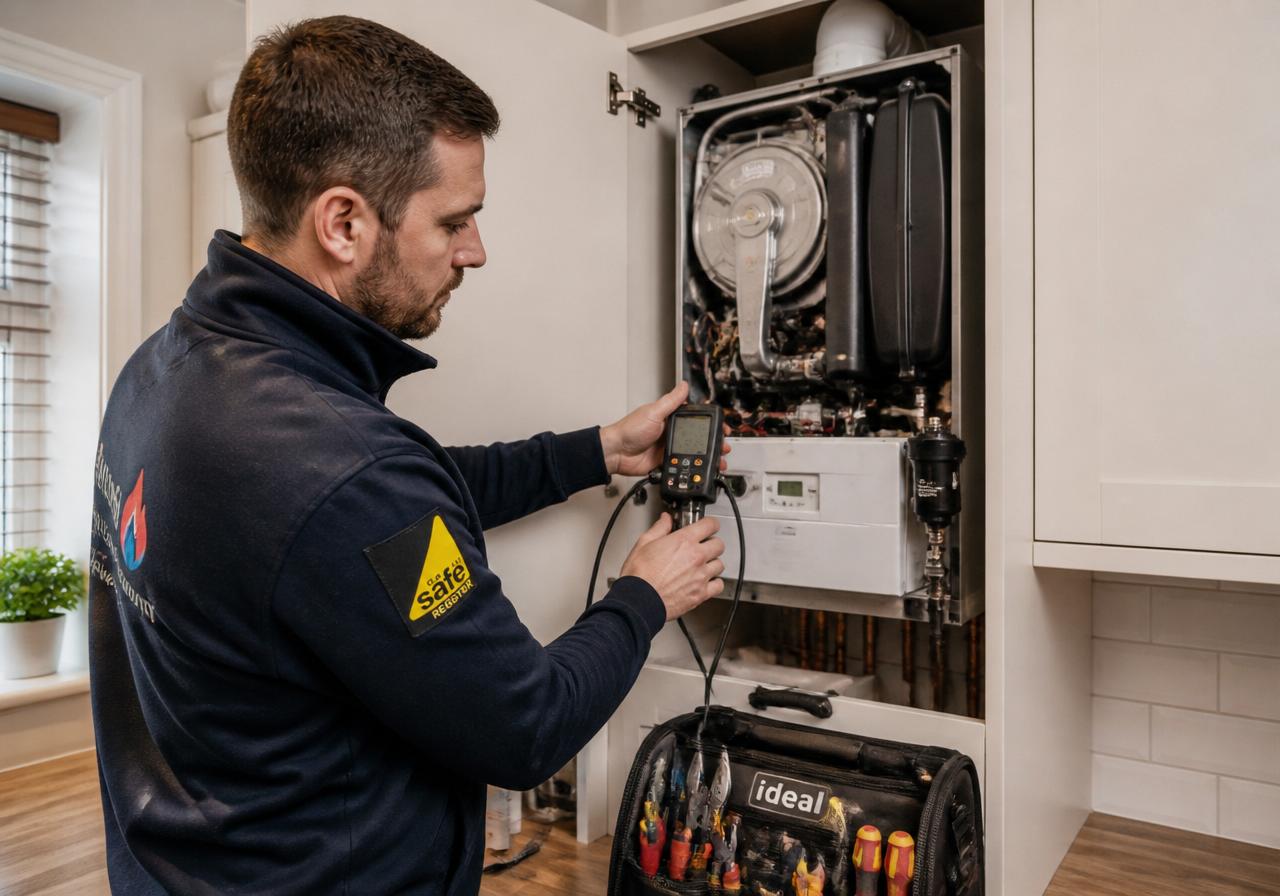
Our diagnostic approach goes beyond just feeling one radiator. We'll check the flow and temperature across multiple radiators. If several radiators exhibit the same cold-at-the-bottom characteristic, it strongly points to system-wide sludge. We'll also examine your expansion vessel and system pressure. Sometimes, we'll drain a small amount of water from the system to visually inspect for discolouration and particulate matter – black, murky water is a clear indicator of magnetite. Another check involves verifying the presence and effectiveness of a magnetic filter on the return pipe; a clean filter indicates its absence or inefficiency.

  • Check multiple radiators
  • Inspect system water
  • Assess magnetic filter

Less Common Factors: Inhibition, Filters, and Pump Speed

While sludge is king, other factors contribute. A system that was never inhibited, or whose inhibitor has long run out, is a breeding ground for corrosion and thus, sludge. Many older properties towards Hag Fold and indeed across Atherton simply weren't fitted with magnetic filters, or they're poorly maintained. These filters are crucial for catching magnetite before it settles. Less frequently, but still a factor, is a pump speed that's too low to keep debris in suspension, allowing it to settle out. Finally, older steel radiators themselves can corrode internally, contributing to the problem.

  • Lack of inhibitor
  • Missing magnetic filter
  • Low pump speed issue

Nearby areas we also cover

Why locals choose Brogas here

As Gas Safe registered heating engineers, Brogas diagnoses radiator issues accurately. We check your whole system, assessing flow, temperature, and water quality to identify root causes. You're left with a clear understanding of the problem and an honest recommendation for a lasting repair.

In summary

Cold radiators at the bottom are usually caused by magnetite sludge. We diagnose this by checking the whole system, water quality, and filter presence. Solutions often involve chemical cleaning or power flushing, plus inhibitor and a magnetic filter for prevention.

Request a Atherton quote

Free · No obligation

Get Your Free Quote

We'll respond the same working day.

We reply to every enquiry within one working day.