Next-day callout slots available for Wigan & surrounding areas

Hindley FAQs — boiler short cycling — the diagnostic sequence

Why does an oversized boiler cause short cycling?+

An oversized boiler produces more heat than the system can dissipate quickly. It reaches its target temperature almost immediately, shuts down, and then quickly cools, restarting the cycle. This is common in older, less insulated homes where the original heat loss calculations are no longer accurate.

Can a simple adjustment fix short cycling?+

Yes, often. Many short cycling issues stem from incorrect pump speeds, too high a flow temperature setting, or too many TRVs closed without a suitable bypass. These are typically resolved with adjustments rather than parts replacement, though diagnosing them requires an engineer.

What is 'differential temperature' and why is it important?+

Differential temperature is the difference in temperature between the hot water leaving the boiler (flow) and the cooler water returning to it (return). A healthy differential indicates heat is being effectively transferred to your radiators. If this difference is too small, heat isn't leaving the boiler, leading to short cycling.

Will short cycling damage my boiler?+

Repeated short cycling puts extra stress on key components like the igniter, fan, and gas valve due to constant starting and stopping. Over time, this accelerates wear and tear, potentially leading to premature component failure and costly repairs. It also wastes gas.

Typical boiler short cycling — the diagnostic sequence work in Hindley

For Hindley householders and landlords dealing with the diagnostic sequence. Local housing stock — 2-up-2-down Victorian terraces and post-war semis toward Hindley Green — shapes how this work is carried out.

  • Boiler ignites and quickly shuts off.
  • Heating system doesn't warm up effectively.
  • Boiler making frequent clicking sounds.
  • Higher gas bills than expected for usage.
  • Boiler feels excessively hot to the touch.

Decision: Initial Observations & Differential Temperature

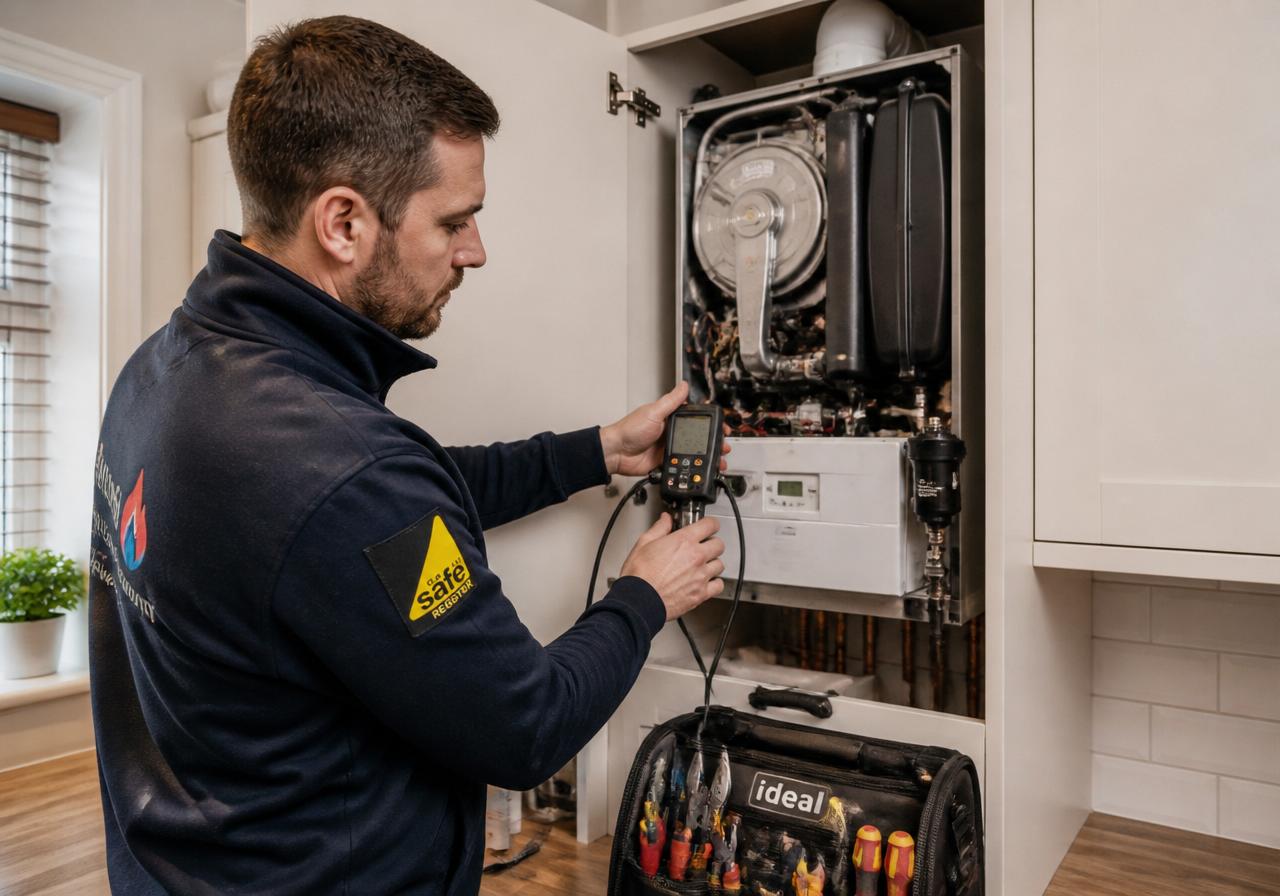
Before touching anything, we observe the boiler's behaviour and listen. Is it truly short cycling, or is it just reaching temperature and staying off? Our first technical step is measuring the differential temperature across the boiler’s flow and return pipes. We look for a rapid rise in flow temperature and a very small differential (often less than 10°C) between flow and return. A quick rise and small difference indicate the heat isn't leaving the boiler fast enough. This guides our next diagnostic steps.

  • Observe boiler run-time and lockout behaviour.
  • Measure flow and return temperatures.
  • Assess the temperature differential.

Execution: Probing for Flow Restriction and Setup Errors

If the differential is low, we then systematically eliminate flow restrictions. We check the system's bypass valve – is it open or installed correctly? Then, we assess the pump speed; if it's too low, water isn't circulating quickly enough to dissipate the heat. In older properties like the 2-up-2-down terraces common in Hindley, sludged systems or blocked filters are significant culprits, severely restricting flow. Finally, we examine the thermostatic radiator valves (TRVs); too many closed at once, especially without an adequate bypass, will cause the boiler to overheat rapidly. We also review the flow temperature setting – is it excessively high for the property's actual heat demand?

  • Check system bypass valve operation.
  • Verify boiler pump speed setting.
  • Inspect system for blockages (filters/sludge).
  • Evaluate TRV settings and system design.
  • Review boiler flow temperature setup.

Aftercare: Recommissioning and System Balancing

Often, the 'fix' isn't a replacement part, but a proper recommissioning. Once we've identified the root cause – be it an oversized boiler, a flow restriction, or incorrect settings – we rectify it. This often involves adjusting pump speeds, opening TRVs, flushing filters, or simply resetting the flow temperature to a more appropriate level. We then monitor the boiler's behaviour for an extended period to ensure stable, efficient operation with a healthy flow and return differential. The aim is a steady, longer run cycle that heats your home effectively without undue wear and tear on your boiler.

  • Adjust pump and bypass settings.
  • Correct flow temperature setup.
  • Balance heat emitters for steady flow.

Nearby areas we also cover

Why locals choose Brogas here

As a Gas Safe registered plumbing and heating business covering Wigan, Brogas prioritises accurate fault finding. We follow a methodical diagnostic sequence, ensuring we address the root cause of boiler short cycling. You are left with a properly running, more efficient heating system.

In summary

Boiler short cycling wastes energy and wears components. Our diagnostic sequence efficiently identifies causes like flow restrictions or incorrect settings for a lasting fix.

Request a Hindley quote

Free · No obligation

Get Your Free Quote

We'll respond the same working day.

We reply to every enquiry within one working day.