
Next-day callout slots available for Wigan & surrounding areas
Postcode
WN2
Council
Wigan Council
Nearest road
A58 Atherton Road
From Wigan
3 miles east

Why locals choose Brogas here

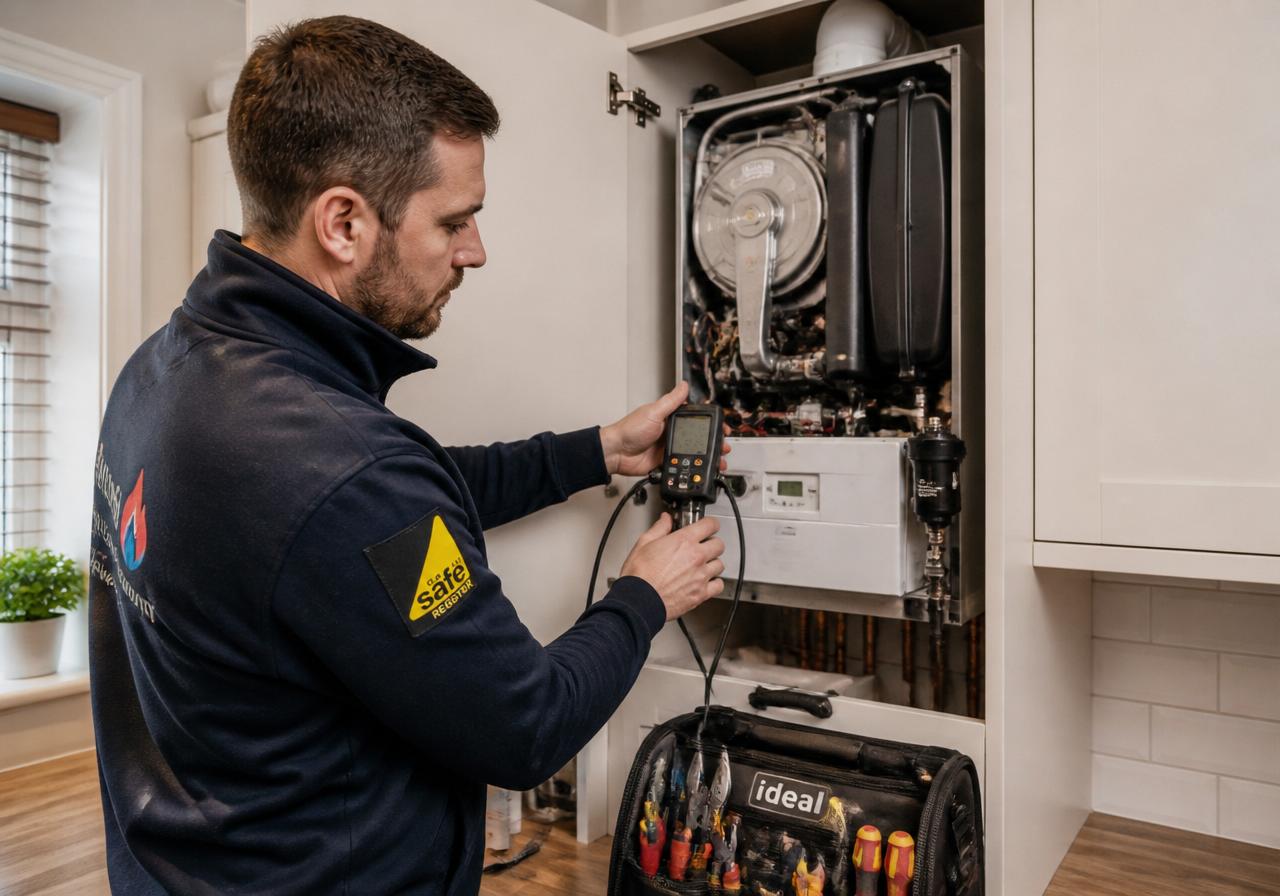
Brogas is a Gas Safe registered plumbing and heating business covering Wigan and surrounding towns. We conduct thorough diagnostics, explaining every step and providing honest, data-driven recommendations. You're left with a clear understanding of your heating system's condition.

Typical radiators cold at the bottom — what happens on the visit work in Hindley

For Hindley householders and landlords dealing with what happens on the visit. Local housing stock — 2-up-2-down Victorian terraces and post-war semis toward Hindley Green — shapes how this work is carried out.

  • Radiators warm at top, cold at bottom
  • Central heating system feels less efficient
  • Boiler working harder for less heat
  • Radiators needing frequent bleeding (for other issues)
  • Heating system never had an inhibitor added

On-Site Diagnosis: Beyond the Obvious

When we attend a call for radiators cold at the bottom, our initial step is always a full system check, not just focusing on the single affected radiator. We'll start by checking the overall system pressure and verifying the boiler's operation. Crucially, we'll examine all accessible radiators, feeling them to identify how many are exhibiting the 'cold bottom' symptom. This immediately tells us if it's an isolated issue or a system-wide problem. We'll also check the boiler's magnetic filter, if one is fitted, to assess the amount of debris it's collected. The pump speed is also checked, as a pump running too slowly won't keep debris in suspension, allowing it to settle.

  • Full system pressure check
  • Boiler operational verification
  • Radiator temperature assessment
  • Magnetic filter inspection
  • Pump speed verification

What We Test & What We Leave You With

Following the visual and tactile inspection, we will conduct a water quality test to check the inhibitor levels. If the system has never been inhibited, or if the inhibitor has long since been exhausted, this will confirm the likely cause. For individual radiators displaying the issue, we can often isolate and drain them to inspect the sludge build-up directly. For more widespread issues, we'll explain the presence of magnetite and recommend the appropriate next steps. This often includes a chemical clean or a power flush, followed by dosing with fresh inhibitor and the installation of a magnetic filter on the return pipework to prevent future build-up. You'll be left with a clear understanding of the fault, its cause, and a detailed explanation of the recommended solutions.

  • System water quality test
  • Inhibitor level assessment
  • Individual radiator inspection (if isolated)
  • Clear diagnosis provided
  • Detailed recommended solutions

Exceptions: When It's Not Just Sludge

While magnetite sludge is overwhelmingly the most common culprit for cold bottoms, there are rare exceptions. For instance, a severely undersized pump might struggle to circulate water effectively, leading to poor flow at the bottom of radiators, even in a clean system. Air locks can also sometimes manifest in unusual ways, though the warm top/cold bottom is typically sludge. Very occasionally, internal radiator blockages from manufacturing defects, though rare with modern radiators, could contribute. We differentiate these by the patterns observed across multiple radiators, and by ruling out the primary sludge indicators through our testing. However, 9 times out of 10, it's a sludge issue.

  • Severely undersized pump
  • Unusual air lock manifestation
  • Rare manufacturing defect blockages
  • Pattern analysis for differentiation
  • Sludge remains primary cause

Hindley FAQs — radiators cold at the bottom — what happens on the visit

Can I fix this myself by bleeding the radiator?+

No, bleeding only removes trapped air, which would cause the top of the radiator to be cold. If your radiator is cold at the bottom and warm at the top, it indicates solid debris (magnetite sludge) settled in the bottom. Bleeding will not remove this and won't solve the problem.

What is magnetite sludge?+

Magnetite sludge is a black, gritty material formed by corrosion of the metal components within your heating system, particularly old steel radiators. Over time, these particles accumulate and settle in the lowest parts of your radiators, blocking hot water flow and reducing efficiency.

Will replacing the radiator fix the problem?+

Replacing a single affected radiator might temporarily address the issue for that one unit. However, if the sludge problem is systemic, it will eventually accumulate in the new radiator too. It's more effective to treat the root cause of the corrosion and clean the entire system.

How can I prevent this from happening again?+

Once the system is cleaned, regular dosing with a high-quality heating system inhibitor is crucial. Also, installing a magnetic filter on the return pipework to your boiler is highly recommended. This filter captures magnetite particles before they re-enter the boiler and radiators, protecting your system.

In summary

Cold radiators at the bottom indicate magnetite sludge. We diagnose the issue with full system checks, water quality tests, and recommend solutions like power flushing, inhibition, and magnetic filters.

Get a Hindley quote

Free · No obligation

Get Your Free Quote

We'll respond the same working day.

We reply to every enquiry within one working day.