
Next-day callout slots available for Wigan & surrounding areas

Standish FAQs — boiler short cycling — what happens on the visit

What's the difference between short cycling and normal operation?+

Normal operation involves the boiler running for longer, consistent periods to maintain heat. Short cycling means it fires, heats rapidly, switches off, and repeats this cycle quickly, indicating it can't dissipate its heat efficiently.

Can I fix boiler short cycling myself?+

Adjusting thermostat settings or opening more radiator valves might help in some cases. However, diagnosing underlying issues like pump speed, restricted flow, or an oversized boiler requires specialist tools and Gas Safe registration.

How does an oversized boiler lead to short cycling?+

An oversized boiler produces more heat than your home can effectively absorb at a given time. It quickly reaches its set temperature, has nowhere for the heat to go, and then shuts down, only to restart when the temperature drops slightly.

Is short cycling bad for my boiler?+

Yes, short cycling puts excessive wear and tear on ignition components and other parts due to frequent starting and stopping. It also consumes more gas than a boiler running at a steady, efficient rate, increasing your running costs.

Typical boiler short cycling — what happens on the visit work in Standish

For Standish householders and landlords dealing with what happens on the visit. Local housing stock — 1930s bay-fronted semis on Rectory Lane and newer estates off Almond Brook Road — shapes how this work is carried out.

  • Boiler fires, runs briefly, then switches off.
  • Heating seems inconsistent or takes too long to warm up.
  • Boiler makes unusual noises before shutting down.
  • Gas bills higher than expected despite heating usage.
  • Radiators are not heating evenly across the property.

The Common Case: Initial Diagnostic Steps

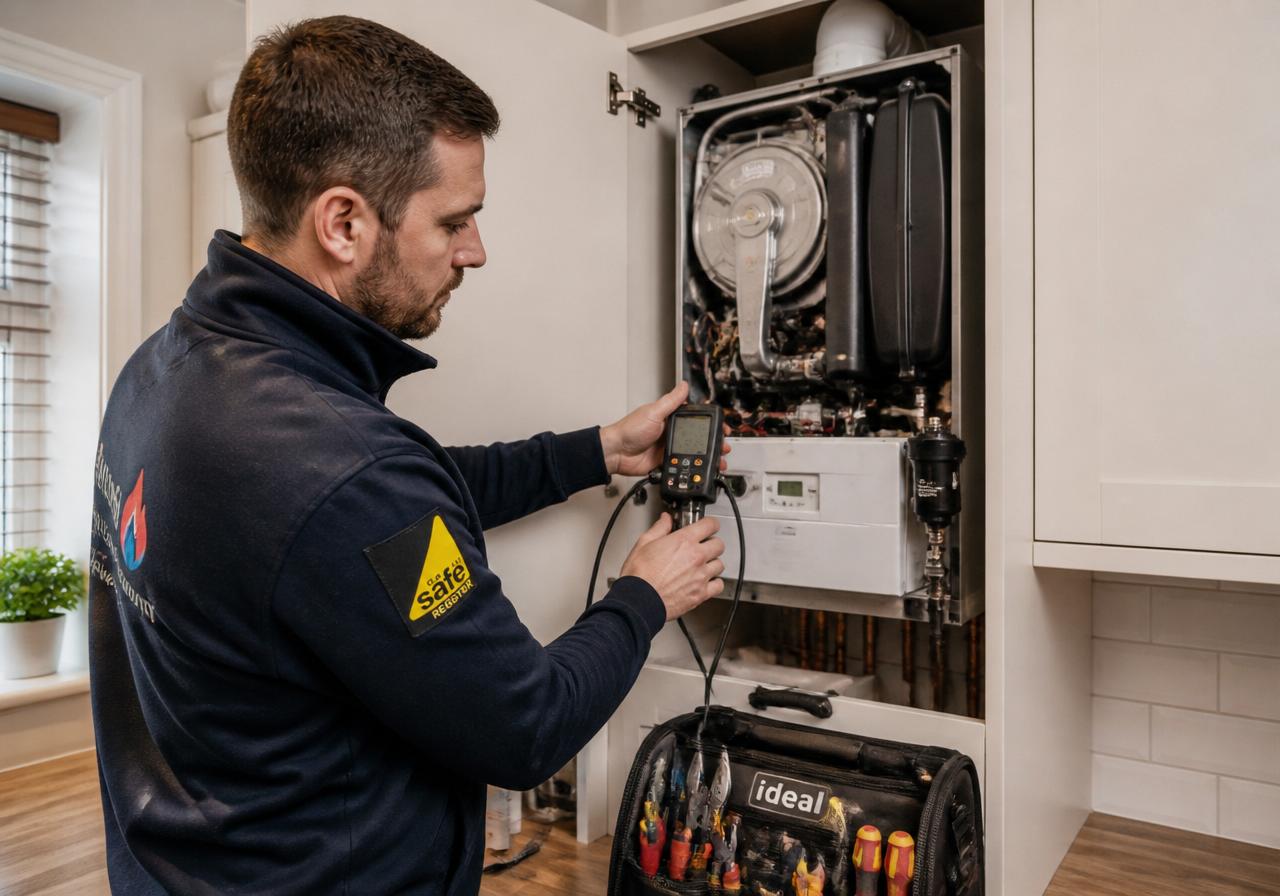
Upon arrival, the first thing we'll do is measure the differential temperature across your boiler's flow and return pipes. This is a critical indicator of how much heat your system is actually moving away from the boiler. A very small difference suggests the boiler is pumping hot water into a system that isn't dissipating it. We'll also check your central heating pump speed settings. Many modern boilers have variable speed pumps, and if this is set too low, or if the boiler is oversized, it contributes directly to short cycling. We’ll verify the system's bypass arrangement to ensure adequate flow when most radiators are off.

  • Measure flow and return temperatures.
  • Check central heating pump speed.
  • Verify system bypass functionality.

The Awkward Case: Digging Deeper for Restrictions

If the initial checks don't pinpoint the problem, we move to investigate potential restrictions. This usually means assessing for a blocked filter – a common culprit in older systems or those that haven't been regularly serviced. A magnet on the filter will tell us if there's ferrous sludge building up. We'll also consider a generally sludged system, which reduces the internal diameter of pipes and radiators, restricting flow. While we can't see inside your pipework, temperature drops across radiators and pipe runs can indicate blockages, pointing to the need for a system flush.

  • Inspect system filter for blockages.
  • Assess for signs of system sludge.
  • Check temperature drops across radiators.

The Calibration Case: System-Wide Setup Issues

Sometimes, the issue isn't a fault but a misconfiguration. We'll look at your boiler's flow temperature setting. If it's set far higher than the system needs for adequate heating, the boiler will quickly reach its set point and shut off. Similarly, if too many thermostatic radiator valves (TRVs) are closed simultaneously without an adequate bypass, the boiler has nowhere to send its heat. Often, the fix costs nothing more than a proper commissioning session – adjusting settings, balancing the system, and ensuring all components work in harmony. You're left with a boiler running as intended, smoothly and efficiently.

  • Review boiler flow temperature settings.
  • Check for excessive closed TRVs.
  • Re-commission boiler and system settings.

Nearby areas we also cover

Why locals choose Brogas here

As Brogas, a Gas Safe registered business, we systematically diagnose boiler short cycling. We check key system parameters, identify component issues, and leave you with a clear explanation of the fix and an optimised heating system.

In summary

Boiler short cycling is a common issue we resolve on site. Our focus is on detailed diagnostics, from temperature differentials to pump speeds and system setup, ensuring a lasting fix for your heating.

Request a Standish quote

Free · No obligation

Get Your Free Quote

We'll respond the same working day.

We reply to every enquiry within one working day.